June 25, 2026
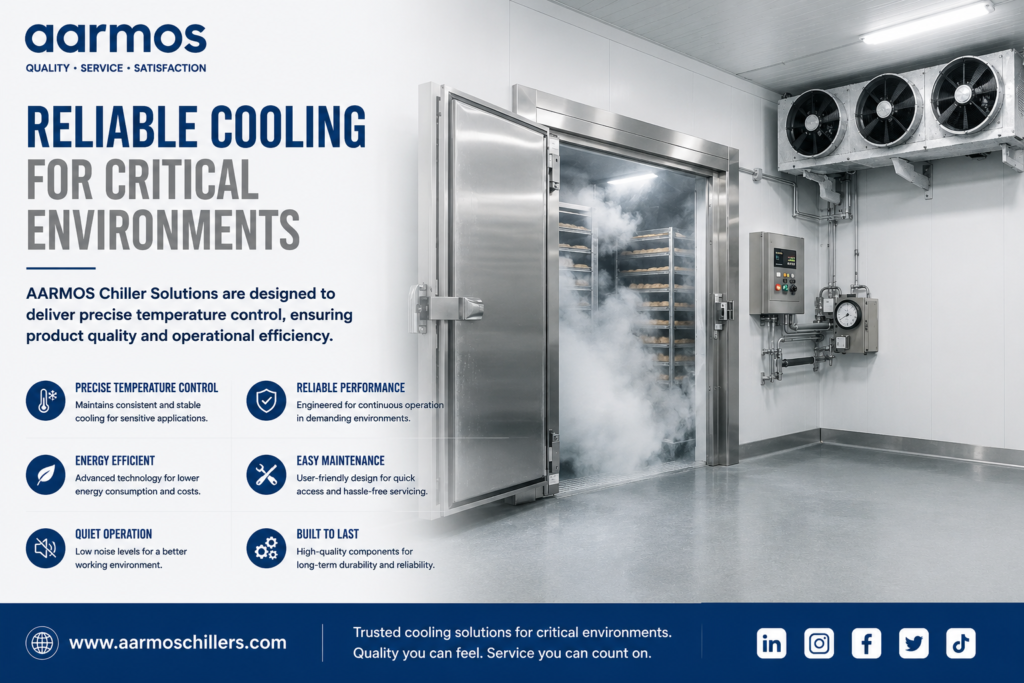
When a product needs to go from production temperature to a safe holding temperature fast, a standard freezer room is not enough. A blast freezer cold room is built for rapid pull-down, tighter temperature control, and product protection during the most critical part of the cooling cycle. For food processors, packaging factories, cold storage operators, and project teams, that difference affects shelf life, compliance, throughput, and energy use.
The usual mistake is treating blast freezing as just a colder room. In practice, the engineering is different. The load is higher, the evaporator selection is more demanding, airflow matters far more, and the room has to recover quickly after door openings and product loading. If engineers overlook those details during the design stage, the room may eventually reach its setpoint, but the product core temperature will lag, frost buildup will increase, and operating costs will rise.
What a blast freezer cold room actually does
Engineers build blast freezer cold rooms to deliver rapid pull-down, tighter temperature control, and better product protection during the most critical stage of the cooling cycle. In food applications, that often means moving cooked items, meat, seafood, bakery products, or prepared meals through the danger zone rapidly before transferring them to storage. In some industrial and pharmaceutical environments, the same principle applies to temperature-sensitive materials that need controlled fast freezing.
The key distinction is product pull-down time, not just room air temperature. A room may operate at deeply negative temperatures, but if airflow distribution is poor or refrigeration capacity is undersized, the product center may cool too slowly. Good blast freezing design focuses on the entire heat removal path – product mass, packaging, stacking pattern, airflow across surfaces, evaporator duty, compressor capacity, defrost strategy, and insulated envelope performance.
Why standard freezer rooms often underperform
Operators use conventional freezer rooms primarily to store products that have already reached the required frozen temperature. Its job is to maintain temperature with moderate door activity and predictable heat gain. A blast freezer cold room faces a different operating pattern. It receives warm loads, often in batches, and must remove a large amount of sensible and latent heat in a limited time.
That changes equipment selection. Higher-capacity condensing units, properly matched evaporators, stronger air throw, and carefully planned product loading arrangements become necessary. Proper floor insulation and vapor sealing become even more critical because extremely low temperatures increase the risk of condensation, ice formation, and structural damage when installers do not build the room correctly.
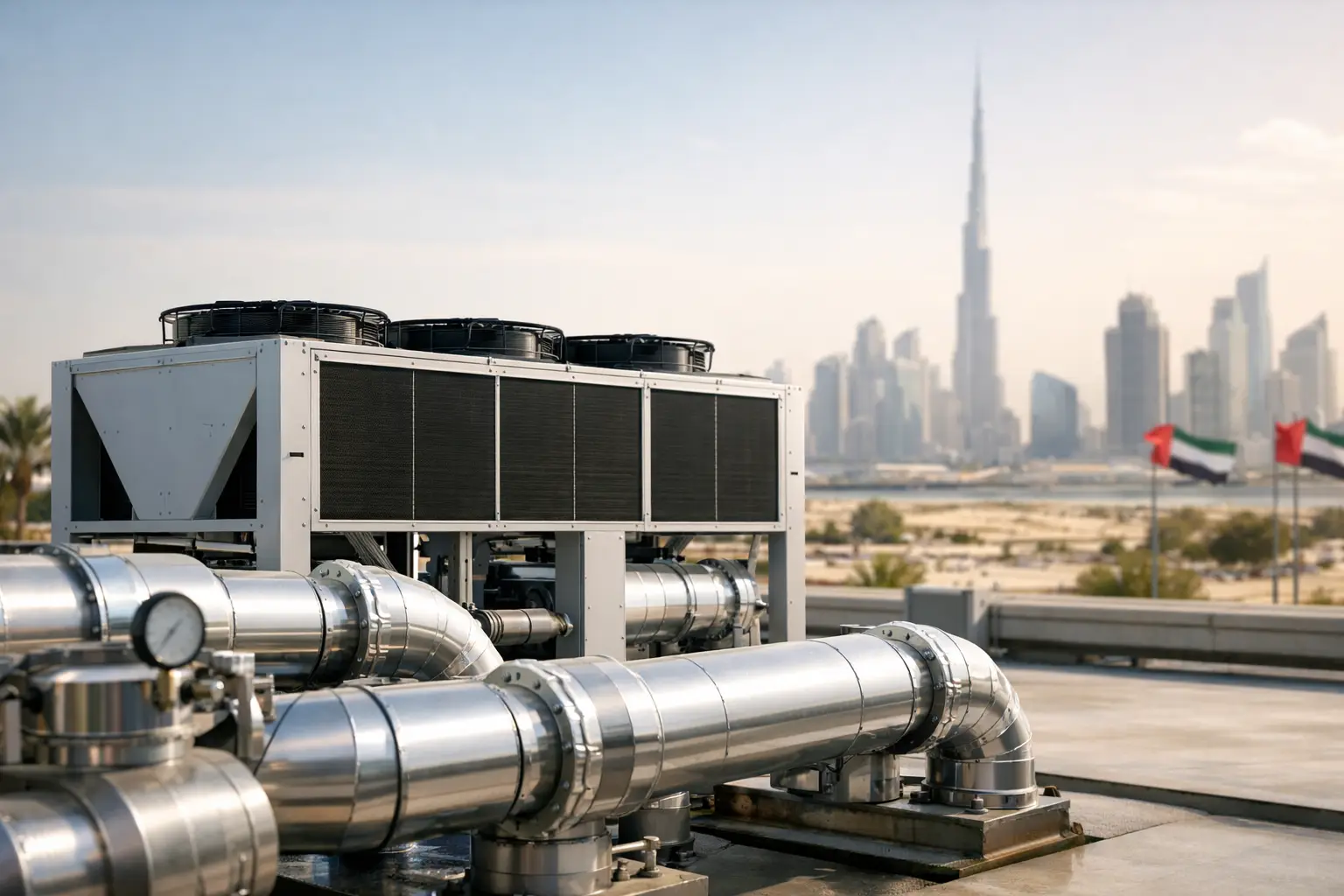
In the UAE and wider GCC, ambient conditions add another layer. High outdoor temperatures, variable loading schedules, and frequent logistics activity can punish a poorly designed freezer room. Engineers should calculate the cooling load around the application instead of relying on a generic room size.
The main design factors that decide performance
Cooling load and batch profile
Start by identifying the product entering the room. Record its temperature, quantity, and the required freezing time. A room freezing 1,000 kg of packed poultry per batch has a very different requirement from a room freezing bakery trays or processed meals. Product moisture content, packaging type, pallet density, and loading frequency all affect refrigeration demand.
This is where engineering matters. If engineers size the refrigeration system only by room volume, the project will likely miss the real cooling requirement. Engineers should select system capacity according to batch load, product pull-down time, internal heat gains, door openings, fan heat, and local ambient conditions.
Airflow and product arrangement
Airflow is often the hidden reason some blast freezers disappoint. Strong airflow improves heat transfer, but only if it reaches the product evenly. When operators pack trolleys too tightly or allow pallets to block the airflow, different parts of the batch freeze at different rates. That creates inconsistent product quality and longer cycle times.
A good layout considers evaporator placement, aisle spacing, rack design, and the direction of supply and return air. In many applications, airflow management can improve freezing consistency as much as additional refrigeration capacity.
Insulation and room construction
At blast freezer temperatures, panel thickness, joint sealing, and vapor barrier integrity are not small details. Poor insulation increases compressor run time and causes ice formation around weak points. Doors need reliable gaskets, heaters where required, and hardware that can handle heavy use without air leakage.
Floor construction deserves special attention. Installers must install floor insulation and underfloor protection correctly. Otherwise, frost heave and long-term structural damage can develop. For industrial and commercial clients, this is one of the biggest reasons to work with a specialist in cold storage systems rather than a general supplier.
Controls, defrost, and monitoring
Operators should control fast freezing with measured operating data instead of assumptions. A well-specified room includes temperature monitoring for both room air and product where needed, safety alarms, defrost logic matched to humidity and usage, and controls that protect the refrigeration system during peak demand.
For facilities with quality requirements, data logging can also support traceability and operating discipline. Data logging helps engineers determine whether loading patterns, door management, defrost timing, or refrigeration performance causes production delays.
A practical project example
A useful way to evaluate any blast freezer project is to look at the operational problem first. Consider a food processing facility handling cooked and packaged products for distribution. The customer may already have a freezer room, yet still struggle with long cooling cycles, uneven product temperature, and product backlog during peak production.
In a case like this, the correct solution is rarely just replacing one condensing unit with a larger one. The engineering review should cover incoming product temperature, batch size by shift, room dimensions, insulation condition, door traffic, evaporator selection, and product loading method. In several real-world cold room projects, the largest improvement has come from redesigning airflow paths and rack spacing alongside refrigeration upgrades.
An engineering-driven supplier approaches the room as a working process, not just a box with cooling equipment. That means verifying pull-down targets, selecting equipment around those targets, and supporting installation and commissioning so the actual result matches the design intent. This is the difference between an equipment purchase and a cooling solution.
Where blast freezer cold rooms are used
Food processing is the most common application, especially for meat, poultry, seafood, ready meals, dairy items, and bakery lines. Packaging factories supporting food products may also require rapid freezing as part of product stabilization before storage or transport.
Pharmaceutical and institutional users may need freezer rooms for controlled low-temperature handling, although the exact temperature profile and compliance requirements can be different from food applications. Some industrial facilities also use fast-freezing rooms for specialty materials or temperature-sensitive process outputs.
Because applications vary so much, there is no universal room configuration. What works for tray-loaded bakery products may be unsuitable for palletized seafood cartons. The right design depends on the product, process flow, sanitation needs, and daily throughput.
FAQs about blast freezer cold rooms
What temperature should a blast freezer cold room operate at?
That depends on the product, desired freezing time, and storage plan. The room air temperature alone does not define success. Product core temperature and pull-down time are the real performance measures.
How is a blast freezer different from a freezer room?
A freezer room is usually intended for storage of already frozen goods. A blast freezer cold room is designed for rapid heat removal from warm or fresh product, which requires higher refrigeration capacity and more controlled airflow.
Can one room be used for both blast freezing and storage?
It can, but there are trade-offs. Mixed-use rooms may reduce capital equipment count, but they often compromise throughput, loading flexibility, or energy performance. In higher-volume operations, separate blast and storage areas usually perform better.
What causes slow freezing in a blast room?
Common causes include undersized refrigeration capacity, blocked airflow, poor product spacing, excessive door openings, weak insulation, and defrost settings that do not match actual moisture load.
How do you know the room is sized correctly?
The answer comes from a proper load calculation based on product type, incoming temperature, batch weight, freezing time target, ambient conditions, and room usage pattern. Room dimensions alone are not enough.
For businesses planning a new facility or upgrading an existing freezer room, the best results come from defining the process first and the equipment second. AARMOS supports blast freezing and cold storage projects with load calculations, system design, equipment selection, installation support, and after-sales service tailored to the application. If you are planning a blast freezer cold room for a food plant, storage facility, or industrial site, contact AARMOS with your product details and operating target so the system can be engineered around real performance, not assumptions.
A well-designed freezer room should do more than hit a setpoint on paper. It should protect the product, support the production schedule, and keep doing both reliably under real site conditions.
Recent Comments
No comments to show.