July 5, 2026
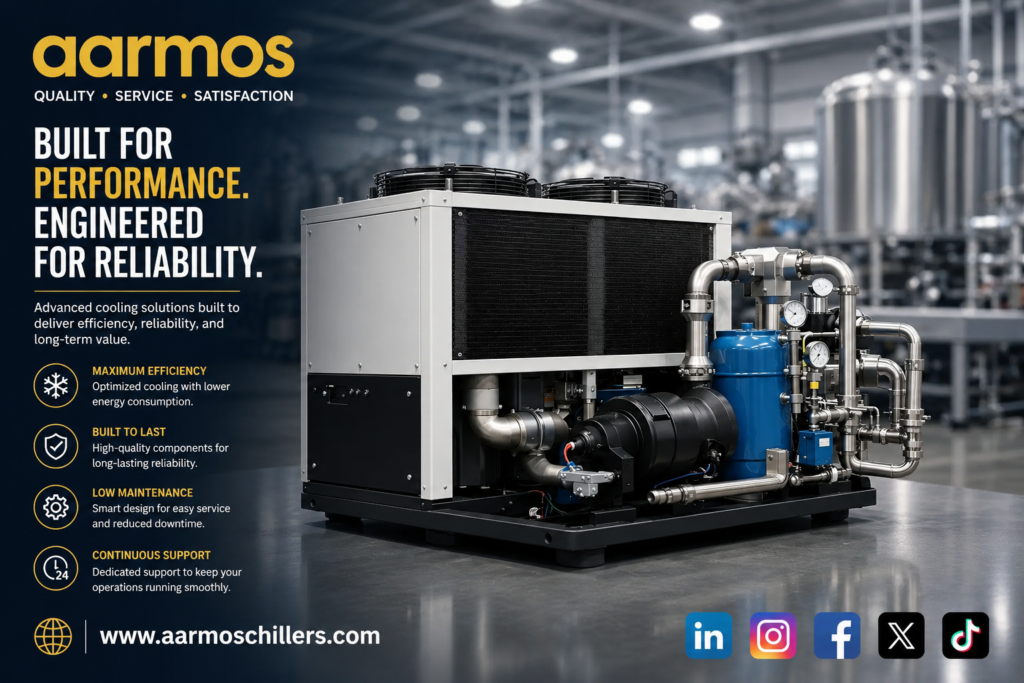
A water chiller usually gets attention only after production temperatures drift, dialysis equipment overheats, or a pool becomes unusable in peak summer. By that stage, the issue is rarely just the machine itself. In most projects, the real question is whether the cooling system was correctly sized, properly installed, and matched to the application from the beginning.
For industrial operators, healthcare teams, contractors, and facility managers, that distinction matters. A chiller is not a standalone box that solves every temperature problem. It is part of a complete cooling system that depends on load calculation, ambient conditions, water quality, circulation design, controls, and service access. When those factors are handled well, the result is stable performance, lower downtime, and longer equipment life.
What water chillers actually do
Water chillers remove heat from a process, space, or body of water and reject that heat to the surrounding environment. In practical terms, they keep production lines within temperature limits, support medical equipment that needs thermal stability, maintain pool comfort, and protect temperature-sensitive operations from disruption.
In the UAE and wider GCC, chillers work under demanding conditions. High ambient temperatures, dust, long operating hours, and seasonal load swings place more stress on equipment than many standard specifications assume. That is why an engineering-led approach matters more than simply selecting a unit by tonnage alone.
Air-cooled chillers are common for many commercial and industrial applications because they are easier to install where cooling tower water is not practical. They fit well in factories, villas, dialysis applications, and commercial sites with limited infrastructure. Still, the right answer depends on available space, water conditions, maintenance capacity, noise considerations, and the actual cooling profile across the day.
Choosing water chillers by application, not by guesswork
A common mistake in the market is selecting water chillers based on a rough estimate or copying a previous project. That can lead to short cycling, poor temperature control, excessive power use, or underperformance during summer peaks.
A better method starts with the heat load. Packaging factories often generate heat from sealing equipment, hydraulic systems, compressed air aftercooling, or continuous production processes. Dialysis cooling systems require stable and precisely controlled operation around sensitive medical equipment. Swimming pools, present a different challenge, where solar gain, pool volume, filtration timing, and desired water temperature during extreme weather determine the cooling load.
Each application behaves differently. Some loads are constant. Others spike during working hours or change by season. A properly engineered system accounts for entering and leaving water temperatures, pump head, pipe routing, ambient design conditions, and future expansion if the site grows.
Industrial water chillers in real operating environments
Industrial sites rarely need generic cooling. They need repeatable output under real production conditions. Food processing facilities depend on stable process temperatures to maintain product consistency and hygiene. Plastic and packaging operations can experience higher rejection rates and reduced throughput when cooling becomes unstable. Commercial manufacturing plants may suffer overheating that shortens equipment life and causes unplanned production stoppages.
This is where industrial water chillers prove their value. They help maintain a controlled process temperature, reduce thermal stress on machinery, and support production continuity. But performance depends heavily on system integration. A good chiller paired with poor water flow, undersized pumps, or weak controls will still deliver disappointing results.
On several factory-type projects in the region, the main customer complaint is not total failure. It is inconsistency. The line runs well in the morning, then struggles in the afternoon. Water temperature drifts upward. Operators compensate manually. Energy use rises. Product quality becomes less predictable. In many cases, the solution is not simply replacing the unit. It involves reviewing the actual heat load, correcting flow issues, resizing buffers where needed, and selecting a chiller designed for local ambient conditions.
Healthcare and dialysis cooling require tighter control
Medical cooling applications deserve a different level of attention. Dialysis machine cooling is a good example because thermal stability directly affects reliable operation. In these environments, the system must be dependable, easy to monitor, and supported by responsive service.
For a dialysis application, equipment selection should consider not only capacity but also noise, footprint, water circuit design, redundancy expectations, and operating safety. A well-planned installation helps reduce interruptions and gives caregivers or facility teams more confidence in daily use. In home or institutional settings, that reliability is often more valuable than maximum capacity on paper.
When evaluating a dialysis cooling project, engineers should look closely at installation conditions, local climate, run hours, and maintenance access. A technically suitable design is one that performs consistently without creating unnecessary complexity for the end user.
Water chillers for pools, buildings, and mixed-use sites
Pool cooling is often underestimated until summer arrives and water temperatures climb beyond comfort. In villas, hotels, and residential compounds, the goal is straightforward: keep the pool usable. The engineering, however, still requires care. Pool volume, exposure to sun, surrounding wind conditions, circulation schedule, and target temperature all shape system selection.
Commercial buildings and mixed-use sites add another layer. Some projects need comfort cooling support, while others combine process cooling with facility requirements. In these cases, equipment durability, control logic, and maintenance planning become just as important as nominal capacity.
A practical design balances performance with serviceability. There is little value in installing a system that is difficult to access, hard to maintain, or oversized for most of the year. Right-sizing and clean installation practices usually produce better long-term results than choosing the biggest unit available.
What separates a dependable chiller project from a risky one
The strongest chiller projects tend to follow the same pattern. The customer problem is clearly defined. The cooling load is calculated rather than assumed. The equipment is selected for the application, not just availability. The piping, controls, and pumping arrangement support the chiller instead of working against it. And after installation, the system is tested under realistic conditions.
That is also why every project should be treated like a case study. Site photos, operating data, and application details help document what was installed, why it was selected, and how it performed. If a packaging facility in Sharjah needed stable process water during long shifts, that operating context matters. If a dialysis setup in Dubai required compact installation and low-noise performance, those details matter too. Good engineering leaves a record that can guide service, upgrades, and future projects.
The measurable benefits usually show up in familiar ways: fewer temperature-related stoppages, more consistent output, better equipment protection, and reduced service calls caused by poor system matching. Energy savings may also follow, but only when the full system has been designed correctly.
FAQs about water chillers
How do I know what size water chiller I need?
You need a cooling load calculation. Capacity should be based on actual heat rejection requirements, operating temperatures, ambient conditions, and flow rate, not a rough estimate from floor area or previous equipment.
Are air-cooled water chillers suitable for the UAE?
Yes, in many applications they are a practical choice, especially where cooling tower infrastructure is not preferred. The key is selecting a unit built and sized for high ambient operation and proper site conditions.
What causes poor chiller performance even when the unit is running?
Common causes include incorrect sizing, inadequate water flow, fouled heat exchangers, control issues, poor ventilation around the unit, and changes in process load that were never accounted for.
Can one chiller serve multiple applications?
Sometimes, but it depends on temperature requirements, load profile, control strategy, and contamination risk. Shared systems can work well when engineered properly, but separate circuits are often better for critical or very different applications.
How important is after-sales support?
It is essential. Even a well-designed system needs maintenance, inspections, and troubleshooting support. Fast response reduces downtime and helps protect both the equipment and the process it serves.
When water chillers are treated as engineered systems rather than off-the-shelf commodities, they deliver far better results. If you are planning a new installation or trying to fix an underperforming cooling setup, contact AARMOS to review the application, assess the load, and develop a practical solution built for dependable performance in real operating conditions.
Recent Comments
No comments to show.