October 18, 2026
A water chiller can look like a simple equipment purchase until the first peak-summer day exposes an undersized unit, poor installation, or a maintenance gap. Across the UAE and GCC, cooling equipment must continue performing when ambient temperatures are exceptionally high, water loads change quickly, and downtime can affect a home, pool, facility, or production line. Selecting the right system starts with the actual application, not only the tonnage shown on a quotation.
For villa owners, the goal may be cooler domestic water during the hottest months. For hotels, residential communities, and pool operators, it may be stable swimming-pool temperatures without excessive energy use. In food processing, dairy, pharmaceutical, cosmetics, and other industrial environments, process-water temperature can directly affect product quality and operational continuity. Each requirement calls for a different approach to capacity, materials, controls, and service planning.
What a Water Chiller Does
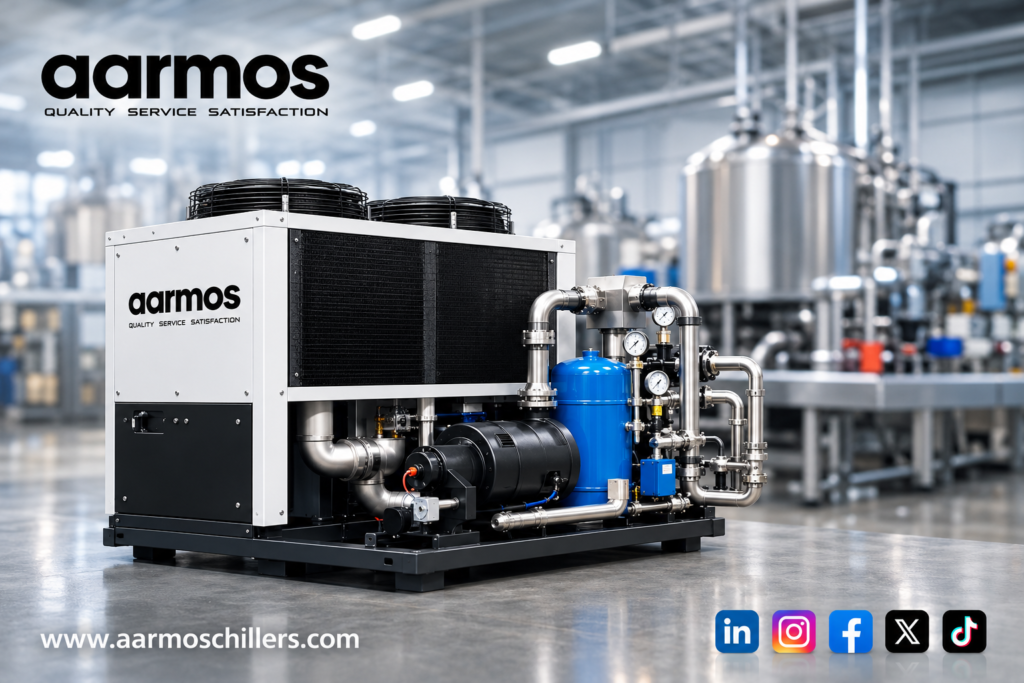
A water chiller removes heat from water and rejects that heat outside through its refrigeration system. The cooled water is then circulated to the point of use, whether that is a domestic water tank, a swimming pool, a process loop, or specialized equipment.
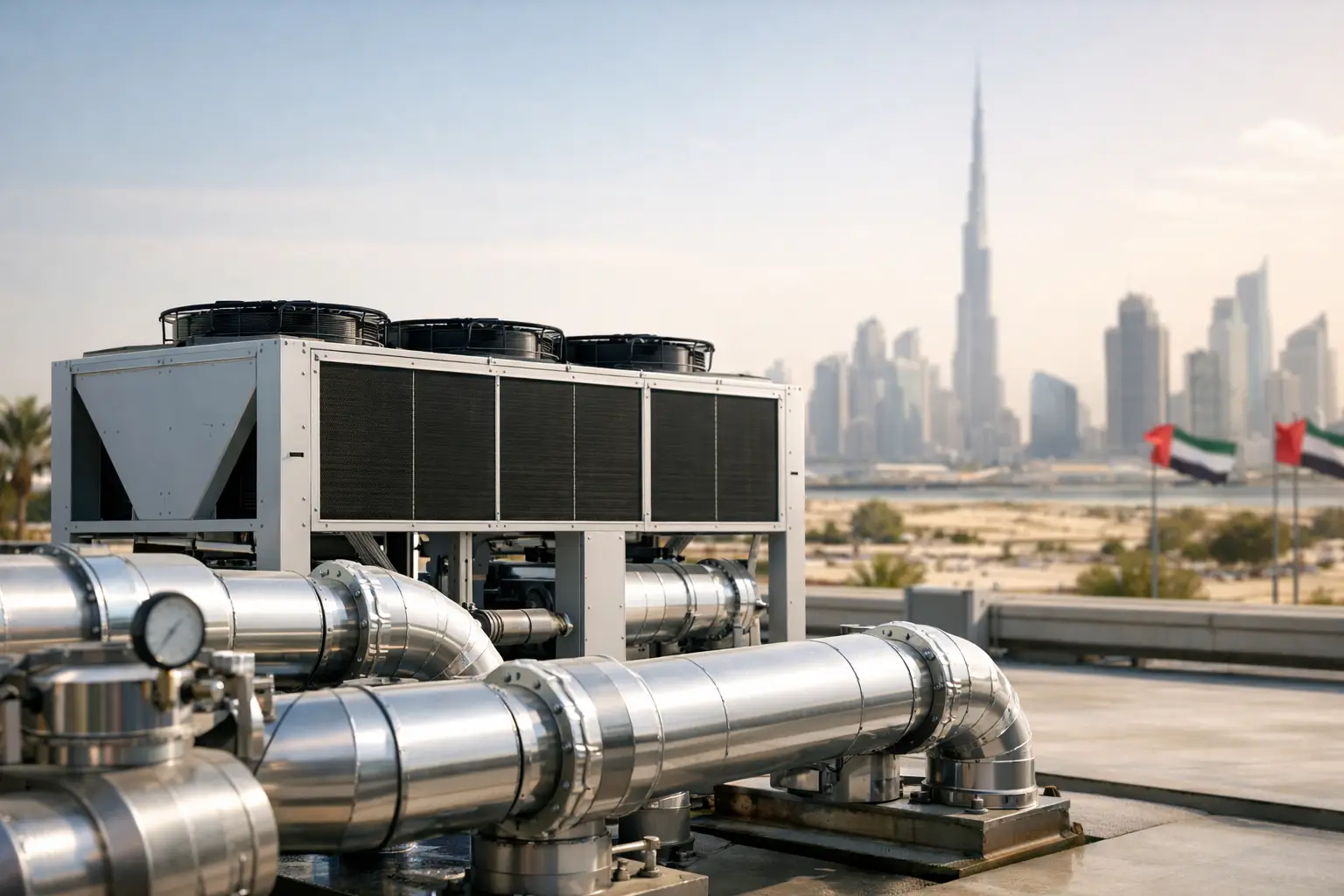
Air-cooled chillers are a practical choice for many UAE installations because they do not require a cooling tower or a separate condenser-water system. They use fans to move air across the condenser coil, making them comparatively straightforward to install and maintain. However, the high outdoor temperatures common across the region place greater demand on the condenser, compressor, fan motors, and controls. Equipment that performs well in mild weather may not deliver the same output in Gulf summer conditions.
The required leaving-water temperature also matters. Chilling domestic water to improve comfort is different from holding a process loop within a narrow temperature range. A pool application has its own variable load, influenced by pool volume, solar exposure, evaporation, bathers, and operating hours. A correct selection accounts for those conditions rather than treating all chilled-water duties as identical.
Start With Capacity, Not a Guess
Capacity is often expressed in tons of refrigeration, but choosing a 2-ton, 5-ton, or larger unit is not simply a matter of matching a number to building size. The actual cooling load depends on water volume, incoming water temperature, desired outlet temperature, water flow rate, recovery time, insulation, heat gain from piping, and the surrounding environment.
For a domestic application, a consultant should assess tank capacity, daily usage patterns, the location of the tank, and the temperature customers expect at fixtures. A chiller that is too small may run continuously and still struggle to reduce water temperature. A unit that is too large can increase initial cost, cycle too frequently under light load, and create avoidable operating expense.
For commercial and industrial sites, capacity calculations should also account for process equipment, peak production periods, simultaneous loads, and planned expansion. A cold storage room, for example, needs more than a basic capacity figure. Door openings, product pull-down load, room insulation, product type, occupancy, and required temperature range all affect condensing-unit selection.
It is wise to design for realistic peak conditions, but oversizing should not be used as a substitute for engineering. The right answer depends on the load profile. A system serving a constantly operating process may need a different safety margin than a residential water-cooling system used mainly during daylight hours.
Ask for the operating conditions behind the rating
When comparing quotations, ask how the stated capacity was calculated. A rated capacity can change substantially with ambient temperature and water temperature. An air-cooled unit should be evaluated for the conditions it will face on site, especially if it will be installed on an exposed roof, in a service yard with limited ventilation, or near other heat-rejecting equipment.
A professional selection should identify the design ambient temperature, required water temperatures, flow rate, and expected duty cycle. This makes it easier to compare equipment fairly and helps avoid a system that appears adequate on paper but loses performance when outdoor temperatures climb.
Components That Matter in GCC Conditions
A chiller is only as dependable as the components that carry its load day after day. Compressor quality, coil construction, refrigerant controls, electrical protection, pump selection, insulation, and cabinet durability all influence performance and service life.
The heat exchanger deserves particular attention. In applications involving swimming pools, chemically treated water, or potentially corrosive conditions, titanium heat exchangers can offer an important advantage. Titanium has excellent resistance to pool-water chemistry and helps protect the equipment from premature exchanger failure. It may cost more initially, but it can be the more economical choice where corrosion risk is high.
For process-water systems, the exchanger material and configuration should suit water quality, temperature range, and fluid type. If glycol or another treatment fluid is used, the system must be designed accordingly. Poor water quality can cause scaling, fouling, restricted flow, and declining heat transfer. These issues reduce cooling efficiency and place unnecessary strain on the compressor.
Durable construction also matters outdoors. A cabinet and coil assembly must withstand heat, dust, moisture, vibration, and normal maintenance activity. Easy access to service components is not a minor detail. It reduces the time required for inspection, cleaning, and repairs, which is valuable for property managers and operators responsible for multiple assets.
Installation Can Protect or Waste Performance
Even a well-engineered chiller can underperform when installed incorrectly. The installation location must provide sufficient airflow around the condenser. Hot discharge air should not be allowed to recirculate back into the unit, as this raises condensing pressure and reduces available capacity. Tight corners, enclosed shafts, and poorly ventilated rooftops are common causes of avoidable operating problems.
Pipe sizing and insulation are equally important. Undersized piping restricts flow, while poor insulation allows chilled water to absorb heat before it reaches the load. Long pipe runs, elevations, valves, filters, and bends affect pump head and must be considered when selecting the circulating pump. A pump that cannot maintain required flow will prevent the chiller from achieving stable performance.
Electrical supply should be verified before commissioning. Voltage imbalance, inadequate cable sizing, unsuitable protection devices, and weak earthing can lead to nuisance trips or component damage. Proper controls should protect the system from low flow, high pressure, phase issues, and abnormal temperature conditions.
Commissioning is the point where the design becomes an operating system. Technicians should verify water flow, refrigerant operating pressures, temperature difference, electrical readings, control settings, drainage, and safety devices. The goal is not simply to switch the unit on. It is to confirm that it is delivering the expected cooling safely and efficiently under real site conditions.
Efficiency Is More Than a Product Feature
Energy efficiency begins with equipment design, but it continues through every operating decision. A correctly sized chiller with clean coils, proper airflow, stable water flow, and sensible temperature settings will typically consume less energy than an oversized or neglected unit.
Setpoints should reflect the real requirement. Reducing water temperature beyond what the application needs increases compressor run time and energy use. For pool cooling, comfort targets should be balanced against weather, operating schedules, and pool cover practices. For commercial processes, tighter temperature control may be necessary, but it should be based on production requirements rather than habit.
Maintenance has a direct financial impact. Dust accumulation on air-cooled condenser coils reduces heat rejection, especially in dusty environments. Dirty strainers, low water flow, scale buildup, refrigerant leaks, worn fan motors, and loose electrical connections can all reduce output before a complete failure occurs. Regular inspection helps identify these issues early, when corrective work is generally faster and less expensive.
Plan Service Before You Need It
A dependable cooling system needs a service plan that matches its importance to the property or operation. A villa owner may need seasonal checks before summer. A hotel, factory, or cold storage facility may require scheduled preventive maintenance throughout the year, along with a clear response process for urgent faults.
Keep operating records that include water temperatures, alarms, pressure readings, service work, and replaced parts. These records help technicians recognize gradual changes in performance and make better decisions about repairs or upgrades. They also help facility teams avoid treating every issue as an isolated event.
For projects that need guidance from selection through commissioning and maintenance, Aarmos Chillers can help match the equipment to the application and site conditions. The strongest result comes from treating the chiller as part of a complete cooling system, not as a standalone box.
A carefully selected, properly installed, and routinely maintained chiller gives owners something more valuable than cold water: confidence that cooling will remain available when the heat is at its most demanding.
Recent Comments
No comments to show.