July 4, 2026
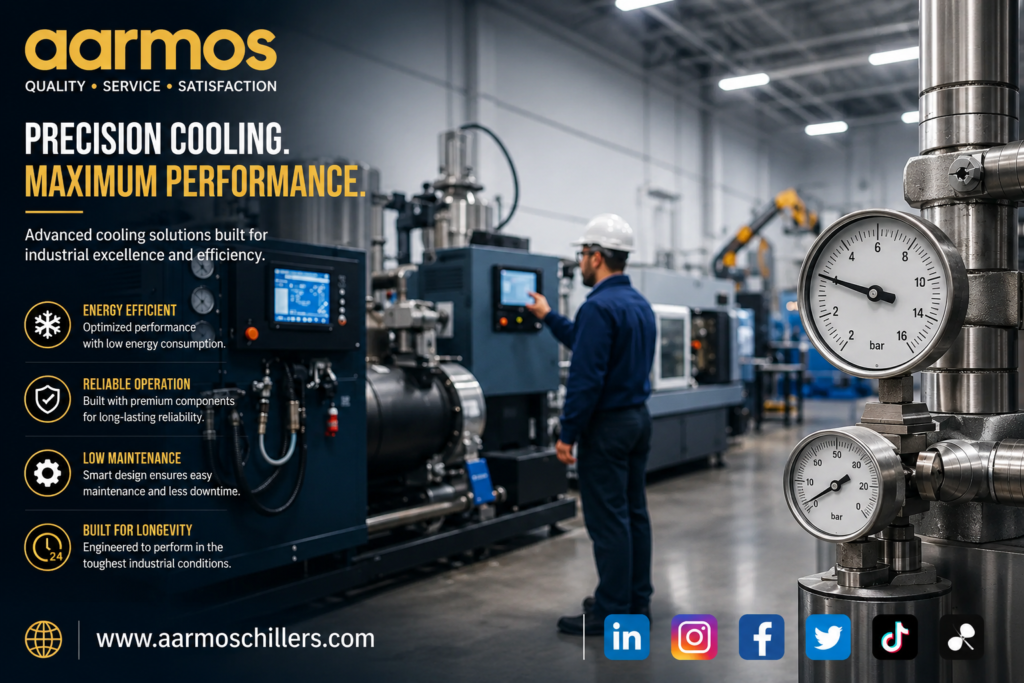
A production line can run perfectly at 9:00 a.m. and start drifting out of tolerance by noon because coolant temperature climbs just a few degrees. That is why a solid manufacturing temperature control guide matters – not as a theory document, but as an operating discipline that protects product quality, machine life, and delivery schedules.
In manufacturing, temperature is rarely just a background condition. It directly affects cycle time, dimensional accuracy, sealing performance, viscosity, curing, fermentation, packaging stability, and equipment reliability. In the UAE and GCC, where ambient conditions place extra stress on cooling systems, small design mistakes can turn into recurring downtime, rejected batches, or rising energy costs.
Why manufacturing temperature control matters on the factory floor
Temperature control in a factory is really about process stability. If process temperature moves outside the acceptable range, the product changes first and the machine usually suffers next. That sequence shows up in many sectors. Packaging plants can experience distorted film behavior and inconsistent sealing due to overheating. Food processing operations may face reduced safety, shorter shelf life, and texture changes when temperatures fluctuate. Plastic and industrial process applications often experience slower production and increased scrap because of unstable temperature control.
Cooling alone is not the real issue. Instead, the challenge is matching the system to the load, the process, and the site conditions. Undersized chillers may appear to work during mild hours and fail during peak conditions. Oversized systems may short cycle, waste power, and still struggle to hold tight control where it matters.
That is why engineering decisions should start with the process requirement, not with a generic equipment rating.
A practical manufacturing temperature control guide for system selection
Engineers can simplify temperature control by asking four questions: What must be controlled? How much heat must be removed? How stable must the temperature remain? What operating conditions will the system face?
Start with the process, not the equipment
Different manufacturing processes need different control strategies. Some applications only need bulk heat removal, while others need precise leaving water temperature and fast response to changing loads. A packaging line, for example, may tolerate broader variation than a precision molding or medical-related process. That difference affects equipment selection, piping design, tank volume, and control logic.
This difference also changes service expectations. A system supporting a non-stop production line needs a stronger reliability plan than one used in intermittent operation.
Calculate the actual cooling load
Accurate cooling load calculations often determine whether a project succeeds or struggles. The load should account for machine heat rejection, production rate, ambient temperature, incoming water conditions, operating hours, and future expansion. Engineers should select outdoor air-cooled equipment for realistic GCC summer design temperatures instead of laboratory conditions.
An engineering-led supplier adds value by calculating the demand instead of recommending a standard unit. Instead of offering a standard unit and hoping it fits, the better approach is to calculate the demand, review the duty cycle, and size the system around real operating conditions.
Define the required control accuracy
Not every factory needs the same temperature tolerance. Some processes are comfortable with a range of a few degrees. Others need much tighter control to maintain repeatable output. When tolerance is tight, sensor quality, flow stability, control sequence, and buffer tank sizing become more important than headline tonnage.
Even with sufficient cooling capacity, a factory can still experience unstable process control if the controls are not configured correctly.
Common factory temperature control problems
Most manufacturing cooling issues show up in patterns. The first is underperformance during hot weather. This usually points to undersized equipment, poor heat rejection, fouled condensers, or a design that did not account for local climate conditions.
Another common issue is unstable product quality despite the chiller running. In many cases, the root cause is not the chiller alone. It may be poor water flow, bad piping layout, low tank volume, blocked strainers, or process loads changing faster than the control system can respond.
High energy consumption is another frequent problem. Factories often see this when systems run continuously at partial efficiency, when pumps are mismatched, or when maintenance has been delayed. Energy performance depends on the full system, not just the compressor.
Another major concern is downtime caused by reactive maintenance. Temperature control equipment should not be treated as a fit-and-forget asset. In critical manufacturing environments, preventive maintenance is part of production planning.
Matching the cooling system to the application
There is no single best cooling solution for every plant. It depends on the process, environment, and operating priorities.
Water chillers for industrial process cooling
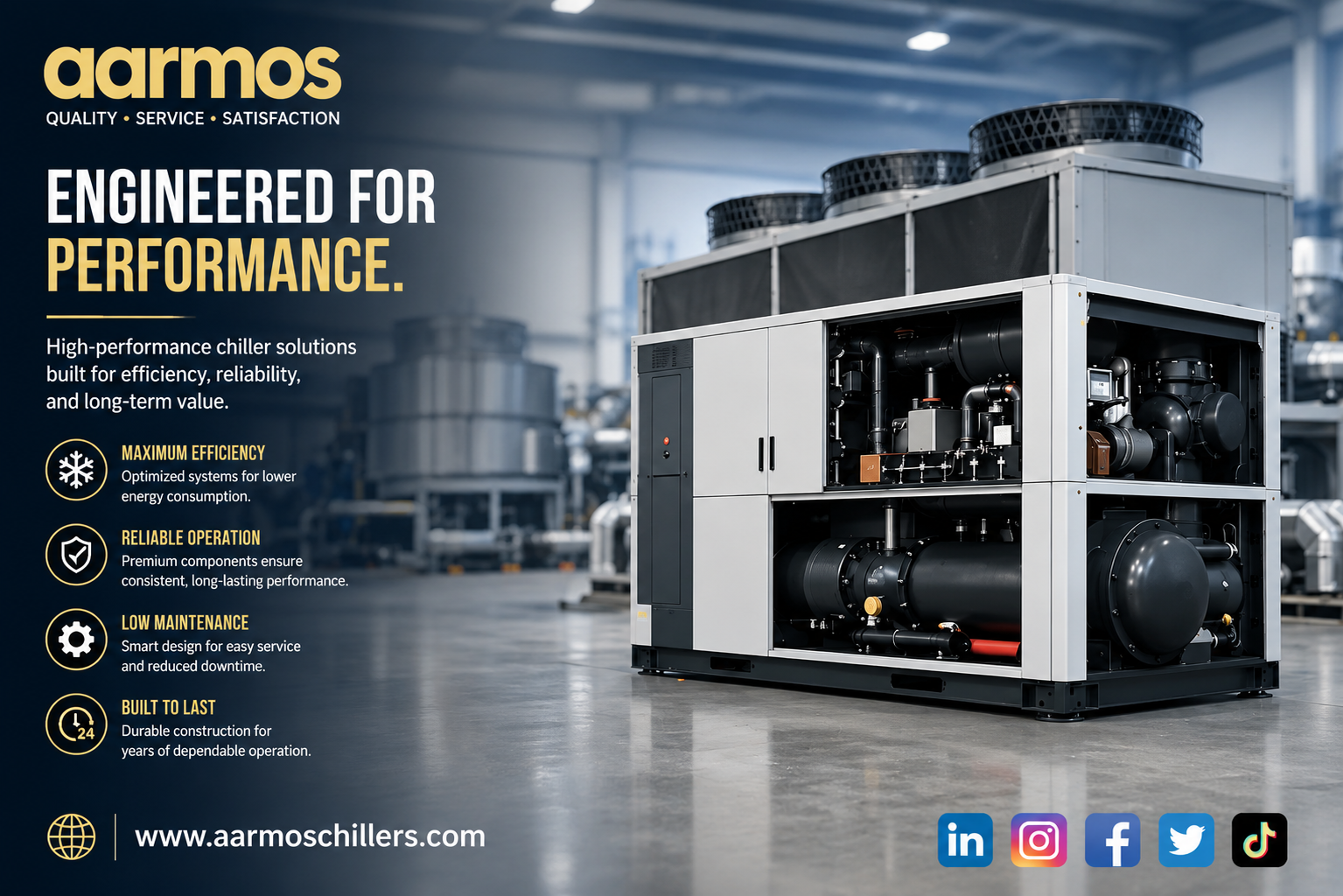
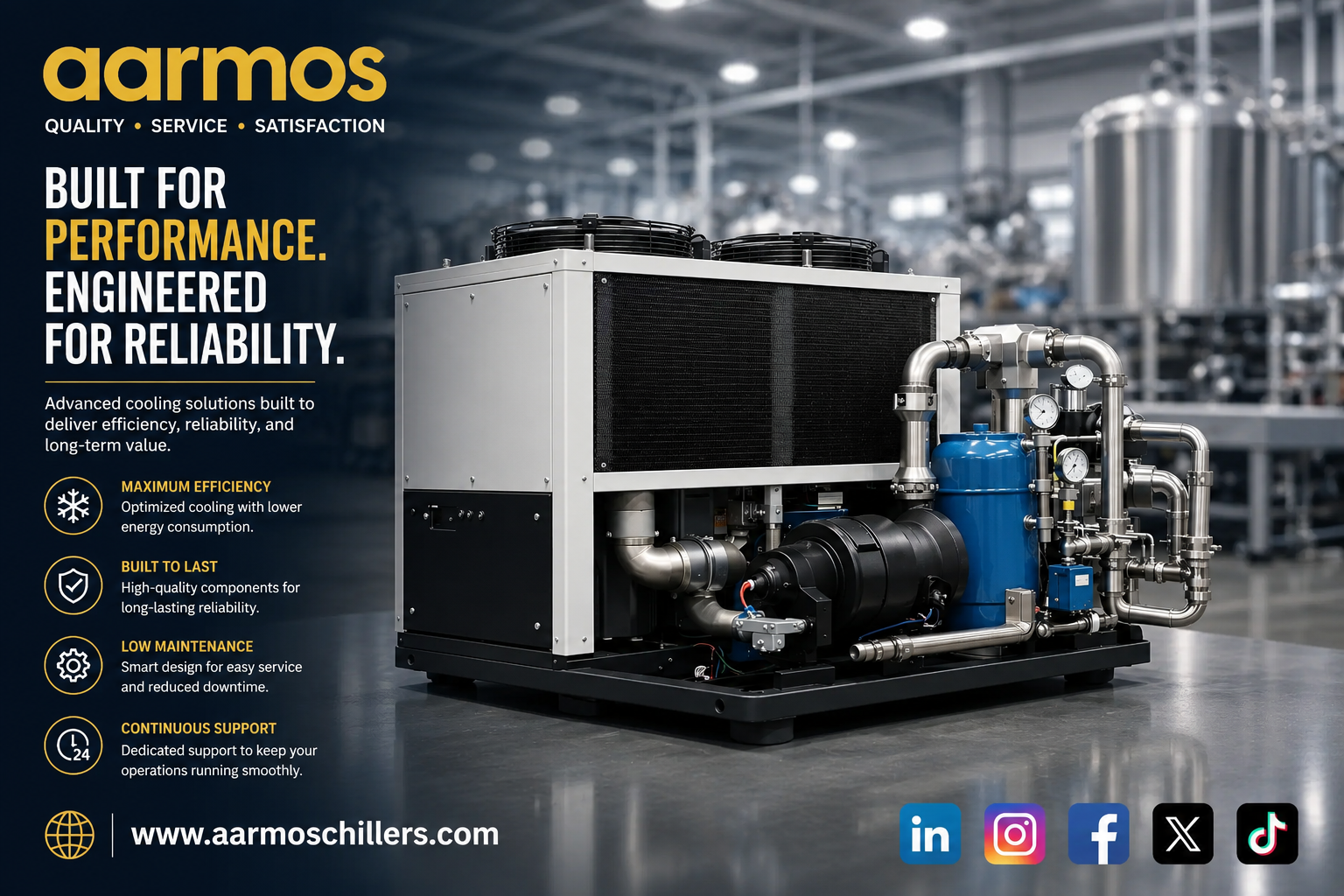
Industrial water chillers are often the most practical choice where process equipment generates repeatable heat loads and requires controlled water temperature. Air-cooled chillers are commonly selected where water availability is limited or installation simplicity is important. Industrial water chillers are widely used for packaging factories, processing plants, machinery cooling, and commercial-industrial facilities.
For a factory in Dubai or Sharjah, an air-cooled chiller may be a strong option if the equipment is selected for high ambient operation and installed with proper airflow clearance. If those conditions are ignored, summer performance can fall short.
Process cooling systems with integrated controls
Some manufacturing sites need more than a standalone chiller. They need a complete process cooling system with pumps, insulated tanks, control panels, and distribution piping designed around the production line. This becomes especially useful where multiple machines share a cooling loop or where future expansion is expected.
A custom system often reduces field issues because the components are designed to work together from the start.
Specialized cooling for sensitive applications
Not all temperature control projects are conventional industrial jobs. Medical cooling, including dialysis cooling solutions, requires a more careful approach to stability, reliability, and user safety. The same principle applies in food storage, pharmaceutical spaces, and other temperature-sensitive environments where process failure carries a higher operational risk.
What good engineering looks like in practice
A useful manufacturing temperature control guide should explain what happens between inquiry and operation. Good engineering starts with site understanding. That means asking about product type, machine heat load, runtime, target temperature, available utilities, installation space, and maintenance access.
Then comes load calculation and equipment selection. The right specification includes cooling capacity, entering and leaving water temperatures, pump requirements, ambient design, refrigerant selection, control features, and protection logic. If the process is critical, redundancy or staged capacity may also be considered.
Installation quality matters just as much. Poor piping support, uninsulated lines, incorrect pump sizing, or weak electrical protection can compromise even a well-selected chiller. After commissioning, operators should know the normal temperature range, alarm behavior, cleaning intervals, and signs of early trouble.
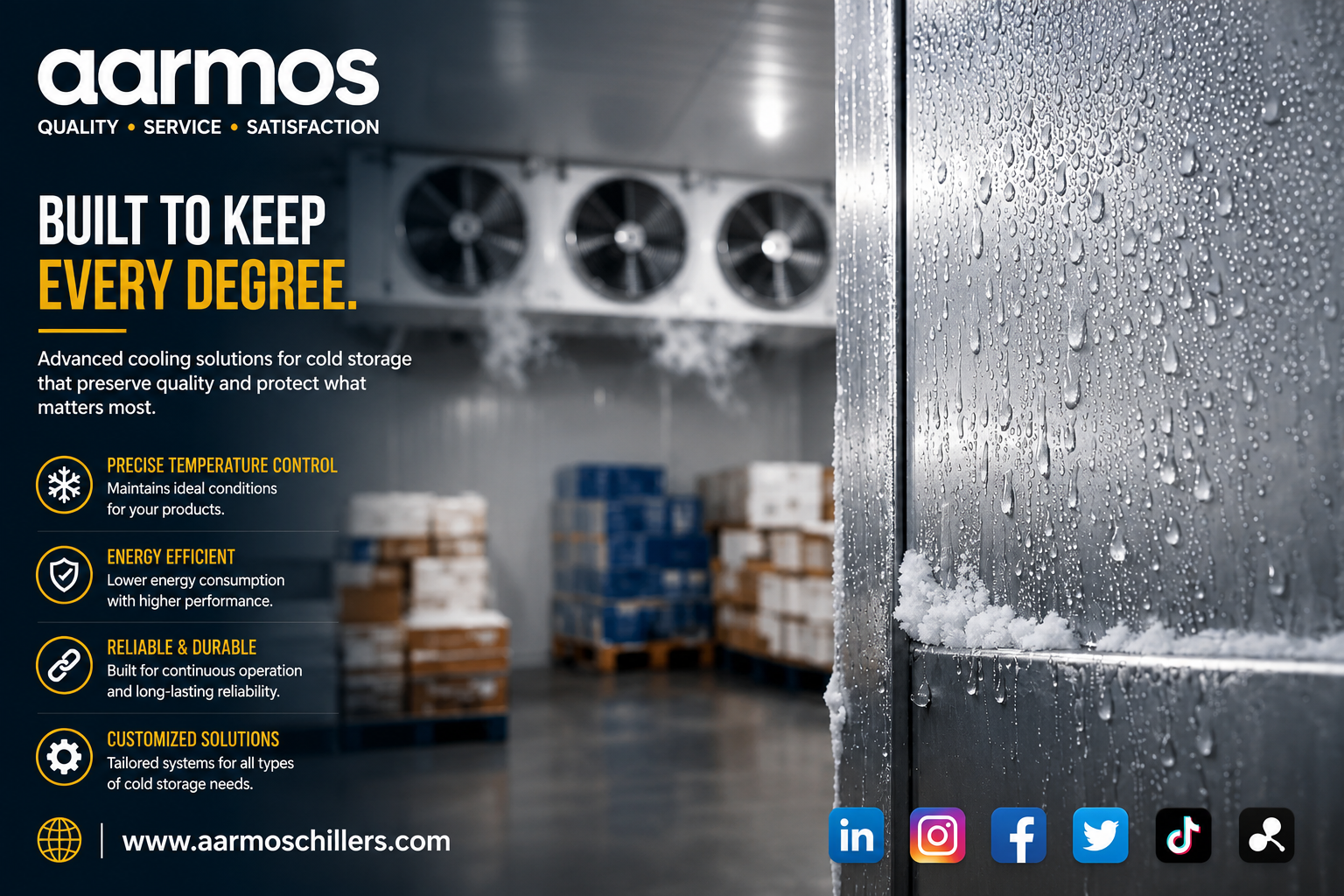
This is also why project documentation and photos matter. Every completed installation can become a useful internal case study. A packaging facility in Abu Dhabi may reveal lessons about line expansion. A food processing site in Al Ain may show the importance of storage temperature recovery. A cold room project in Fujairah may highlight insulation and door usage patterns as much as refrigeration capacity.
Maintenance is part of temperature control
Factories often think of maintenance as a separate topic, but it directly affects temperature stability. Condenser cleaning, refrigerant checks, water treatment, flow verification, sensor calibration, and electrical inspection all influence cooling performance.
The trade-off is simple. Preventive maintenance takes planned time. Unplanned failure takes production time, service time, and often product loss as well. For critical plants, the second option is much more expensive.
Good maintenance planning also improves equipment life and keeps performance closer to design conditions. That matters in facilities where even short production interruptions create scheduling pressure downstream.
FAQs
What is the ideal temperature range for manufacturing processes?
There is no universal range. The correct temperature depends on the product, machinery, material properties, and required quality tolerance. Some processes need only general heat removal, while others need tightly controlled chilled water temperatures.
How do I know if my factory chiller is undersized?
Common signs include rising process temperature during peak hours, frequent alarms, long recovery times, and product inconsistency when production load increases. A proper cooling load review is the best way to confirm it.
Are air-cooled chillers suitable for UAE factories?
Yes, if they are selected for local ambient conditions and installed correctly. In hot climates, condenser sizing, airflow clearance, and maintenance discipline become especially important.
Can one cooling system serve multiple production machines?
Yes, but it depends on the combined load, piping layout, flow balance, and control strategy. Multi-machine systems usually perform better when designed as an integrated process cooling solution rather than expanded informally over time.
How often should manufacturing cooling equipment be serviced?
It depends on operating hours, environment, and application criticality. Facilities with continuous production or dusty conditions usually need a more structured preventive maintenance schedule.
If your plant is dealing with unstable temperatures, rising downtime, or a cooling system that no longer matches production demand, the next step is not guessing – it is assessing the real load, the real process, and the real site conditions. For manufacturers, healthcare operators, and project teams across the UAE and GCC, AARMOS approaches temperature control the way it should be handled: with practical engineering, dependable equipment, and support that continues after installation. Contact the team to discuss your application and build a solution that fits your process, not just a catalog.
Recent Comments
No comments to show.