June 29, 2026
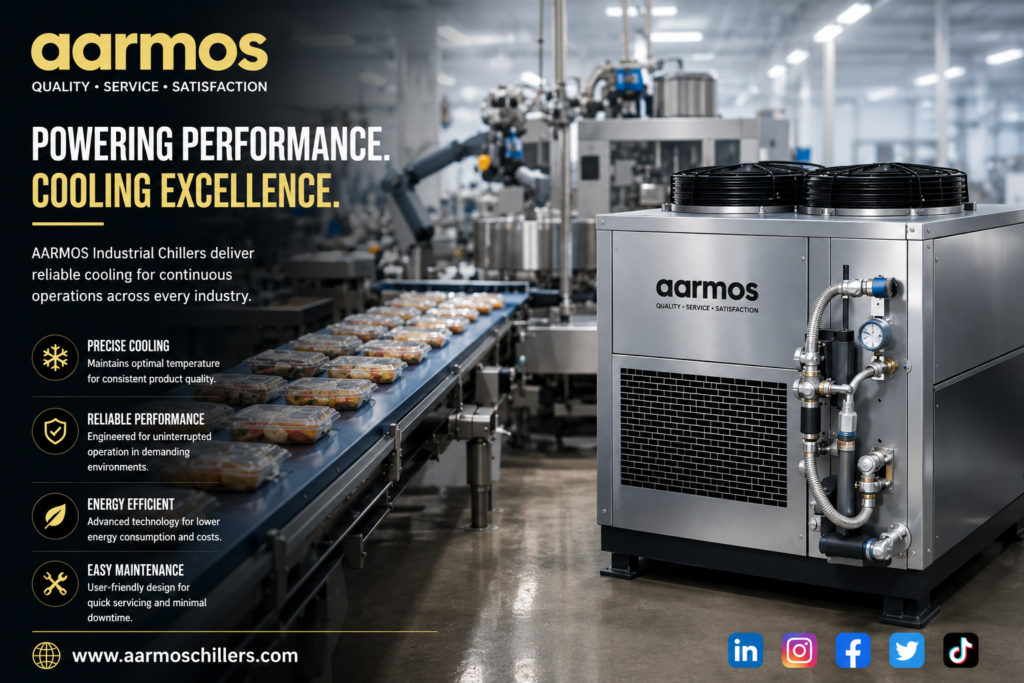
When a food packaging line starts missing output targets, the root cause is not always mechanical wear or operator error. In many facilities, the issue starts with temperature drift. Seal quality changes, film behaves differently, product temperature rises, and the line slows down to protect quality. A properly selected chiller for food packaging line operation keeps those variables under control before they turn into waste, downtime, or rejected batches.
Food packaging lines are unforgiving because several temperature-sensitive steps happen at once. You may be cooling sealing jaws, vacuum pumps, hydraulic systems, tunnel equipment, product transfer points, or molded components that need to hold shape within tight tolerances. If process cooling is unstable, small temperature fluctuations can create visible defects very quickly.
Why a chiller for food packaging line performance matters
Packaging managers usually look first at speed, output, and maintenance hours. Process cooling heavily influences those performance metrics. In thermoforming, flow wrapping, tray sealing, and vacuum packaging, heat has to be removed consistently. Too little cooling can affect sealing integrity, product appearance, and machine reliability. Too much cooling can create condensation, material brittleness, or unnecessary energy consumption.
Engineers should never treat chiller selection as a generic utility purchase. The cooling system must match the process load, ambient conditions, production schedule, and hygiene requirements of the plant. In the UAE and wider GCC, ambient temperatures and plant operating conditions make proper sizing even more important. A unit that appears suitable on paper may underperform in summer if the heat load and ventilation conditions were not calculated correctly.
An engineering-driven approach starts with understanding what the packaging line is actually cooling. Some lines need stable water temperature for seal bars. Others need cooling for forming molds, product handling areas, or integrated ancillary equipment. The load can also change by shift pattern, product type, film thickness, and cleaning schedule.
What the chiller is usually cooling on a packaging line
In food factories, a chiller often supports more than one point on the line. A chiller may cool sealing assemblies to maintain repeatable seal quality. It may also serve vacuum pumps or compressors that generate heat during extended production. Many production lines also use it for intermediate product cooling, especially when packaging speed depends on reaching the target temperature before sealing.
For thermoforming and tray sealing operations, cooling affects dimensional consistency and cycle time. For bottling or filling lines, process cooling may be linked to product stability, cap sealing, or equipment reliability. In high-throughput operations, even a slight increase in process water temperature can reduce line speed over a full shift.
That is why load calculation matters. A supplier should not simply ask for machine model numbers and recommend a standard unit. The better approach is to review the connected equipment, operating temperatures, flow requirements, ambient conditions, and future expansion plans.
How to size a chiller for food packaging line use
Correct sizing determines whether a project succeeds or struggles. An undersized chiller will run continuously, struggle in peak ambient conditions, and fail to maintain stable leaving water temperature. An oversized unit may short cycle, waste power, and introduce control issues if the system volume and controls are not designed properly.
The basic engineering inputs include total heat load in kilowatts, required water supply temperature, return water temperature, flow rate, pipe layout, pump head, and the maximum ambient temperature expected at site. If the line runs in a factory in Dubai, Sharjah, or Abu Dhabi, summer operating conditions should be built into the design margin rather than treated as an exception.
A practical design review should also ask whether the line operates as a single continuous load or as intermittent zones. Food packaging plants often change products, run multiple shifts, and schedule washdowns that affect actual cooling demand. This is where field experience becomes valuable. The right design accounts for real operations, not only nameplate assumptions.
Air-cooled vs water-cooled systems
For many food packaging facilities, an air-cooled chiller is the practical choice because installation is simpler and water infrastructure is reduced. It works well where plant layout supports good airflow and where maintenance teams want easier access to the system.
A water-cooled system may offer advantages in certain industrial environments, especially when cooling demand is high and site utilities are already designed for it. The trade-off is greater installation complexity and a broader maintenance scope. The right answer depends on plant infrastructure, energy strategy, and service capability.
Temperature stability matters more than low temperature alone
Some buyers focus on how cold the chiller can go. In packaging, stability is usually more important than chasing the lowest possible water temperature. If your process needs 50 F or 59 F water consistently, a system that holds that temperature tightly is often more valuable than one that reaches lower temperatures with poor control.
Stable temperature helps maintain seal quality, repeatability, and machine protection. It also reduces the risk of overcooling certain zones and creating condensation around sensitive packaging areas.
Design details that affect daily performance
The chiller itself is only part of the result. Tank sizing, pump selection, controls, filtration, insulation, and piping layout all affect how the line performs. A well-built process cooling system should be easy to maintain, simple to monitor, and suited to the cleanliness standards of a food production environment.
For example, insulated piping helps reduce thermal gain and condensation. Proper filtration protects heat exchangers and machine cooling circuits from fouling. A buffer tank can improve temperature stability where the load fluctuates rapidly. If the facility runs multiple packaging lines, zoning may be better than forcing one system to handle very different process conditions.
Control logic matters as well. Operators and maintenance teams need clear temperature readouts, alarm visibility, and straightforward troubleshooting. In production, a cooling problem should be identified early, before it turns into lost output.
A practical project example from a packaging environment
A recent packaging-related application in the UAE involved a production facility facing unstable machine temperatures during long operating hours. The process equipment ran acceptably in the morning but performance dropped as ambient conditions increased. Operators noticed more variation in sealing quality and occasional stops for temperature-related machine protection.
The solution was not just replacing a unit with a larger one. The engineering review looked at actual heat load, water flow, installation location, and the way the line behaved across the day. The revised system included properly matched chiller capacity, process pump selection, insulated piping, and controls designed for steady leaving water temperature. After commissioning, the facility gained more stable operation through the shift and reduced unplanned interruptions tied to overheating.
That kind of result is common when cooling is designed around the process instead of the catalog. Every project should become a case study because the details matter. Site photos, operating conditions, machine types, and performance data all help future customers understand what good engineering looks like in practice.
Maintenance and service are part of the selection
The best chiller for a food packaging line is not only about initial capacity. It also needs to be serviceable. Food factories cannot wait days for diagnosis when production is affected. Components should be accessible, controls should support fault identification, and the service team should understand industrial process cooling rather than only general HVAC.
Preventive maintenance usually includes refrigerant circuit checks, condenser cleaning, pump inspection, electrical verification, flow checks, water quality review, and control calibration. In food plants, maintenance intervals may need adjustment based on dust, washdown practices, and operating hours.
Long-term reliability usually comes from three things working together: correct sizing, proper installation, and responsive after-sales support. If one of those is weak, the system tends to become a recurring operational issue rather than a stable utility.
FAQs about chiller for food packaging line applications
What size chiller does a food packaging line need?
It depends on the connected heat load, required water temperature, flow rate, ambient conditions, and operating pattern. A proper cooling load calculation is more reliable than choosing by machine size alone.
Is an air-cooled chiller suitable for food packaging factories?
Often yes. Air-cooled chillers are common in packaging facilities because they are easier to install and maintain. They must still be selected for the actual site temperature and airflow conditions.
Can one chiller serve multiple packaging lines?
Yes, if the total load, piping design, pump capacity, and controls are engineered correctly. In some cases, separate circuits or zones are better to maintain temperature stability.
What temperature should the process water be?
There is no single answer. The correct setpoint depends on the packaging machine, product characteristics, and process requirement. Consistency is usually more important than selecting the lowest temperature possible.
How does poor cooling affect packaging quality?
It can lead to weak seals, inconsistent forming, equipment overheating, slower cycle times, more rejects, and higher downtime. These problems often appear gradually before becoming obvious production losses.
A food packaging line does not need generic cooling. It needs process cooling that matches the line, the plant, and the production target. If you are planning a new installation or dealing with recurring temperature-related issues, contact AARMOS for an engineering review of the application, cooling load, and system design.
Recent Comments
No comments to show.