June 25, 2026
A product that looks perfectly fine at receiving can become a write-off by the end of the day if the storage temperature is wrong. That is why the cold room vs freezer room decision matters so much in food processing, distribution, healthcare, and industrial operations. The two systems may look similar from the outside, but they are designed for very different temperature ranges, construction details, and operating costs.
For facility owners and project teams, the mistake is usually not choosing the “better” option. It is choosing the wrong option for the product, loading pattern, and working environment. In practice, that leads to frost buildup, unstable temperatures, high energy use, or stock loss. A well-designed system starts with the application, not just the room size.
Cold room vs freezer room: the core difference
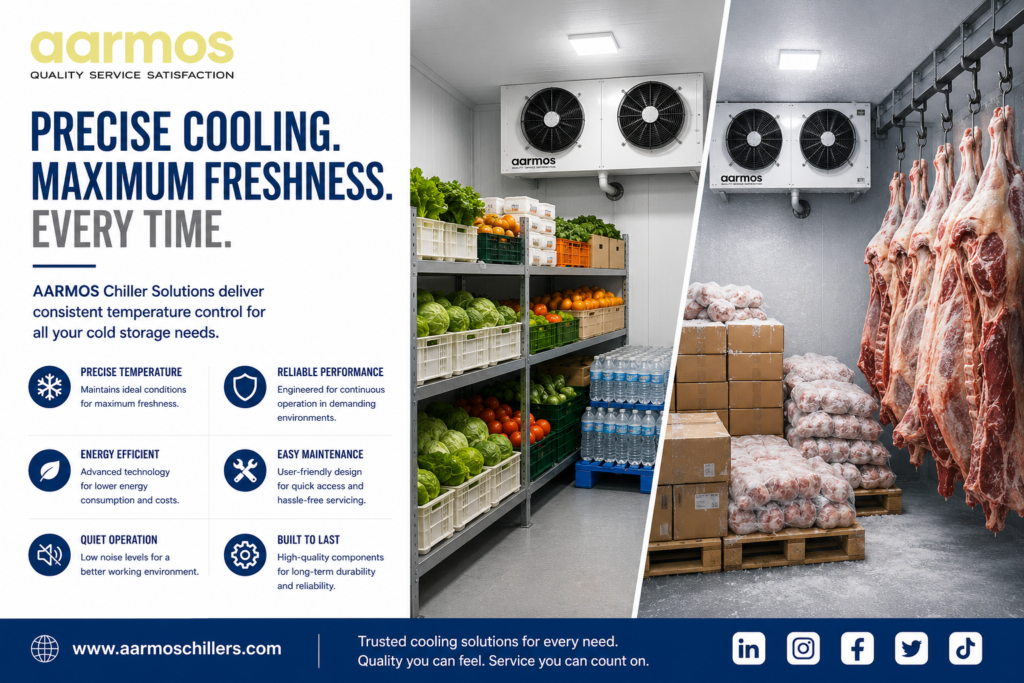
Engineers design cold rooms to maintain chilled temperatures for fresh produce, dairy products, beverages, flowers, pharmaceuticals, and short-term food storage. In many applications, the operating range falls between about 35.6°F and 46.4°F, depending on the product requirement.
By contrast, engineers design freezer rooms for sub-zero storage, typically from 23°F down to -13°F or lower depending on the application. That difference in operating temperature changes almost everything in the system design – insulation thickness, refrigeration capacity, defrost strategy, door specification, floor treatment, and even how staff use the space. The simplest way to understand the difference is this: a cold room slows deterioration while a freezer room preserves products through freezing.
If the stored product should stay fresh and unfrozen, a cold room is usually the right choice. If the product must remain frozen through storage and dispatch, a freezer room is necessary.
Temperature alone is not the full story
Many buyers compare setpoint temperature first, which is reasonable, but incomplete. The more useful engineering question is how the room behaves during real operation. Door opening frequency, warm product loading, occupancy, lighting, evaporator selection, and ambient conditions all affect performance.
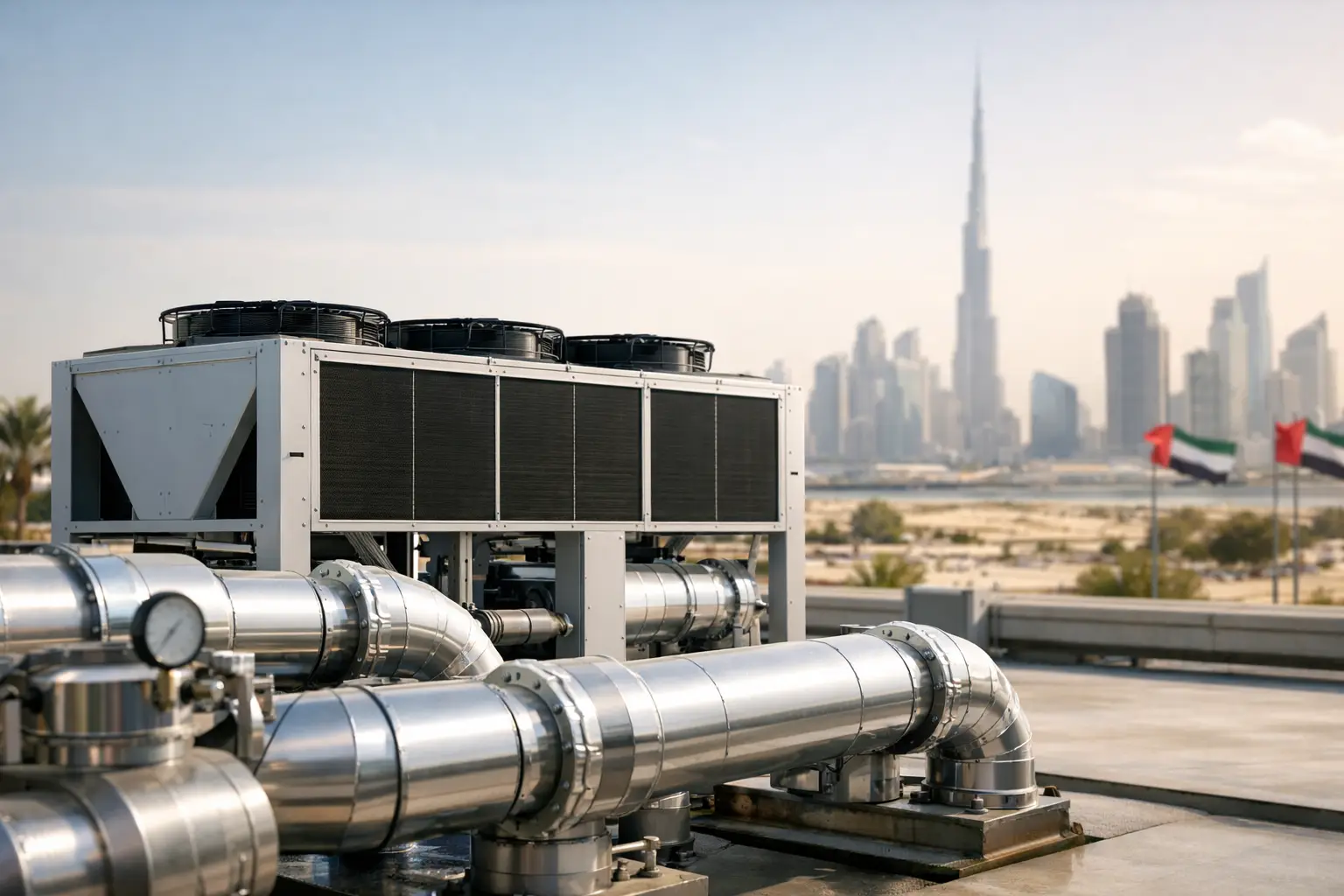
In UAE and GCC projects, ambient heat is a major design factor. A freezer room operating in a hot external environment needs stronger thermal protection and tighter control than a chilled room. If engineers underestimate that factor during load calculation, the system may run continuously, struggle to pull down product temperature, or create icing at the evaporator.
That is why system selection should include sensible heat gain, infiltration load, product load, equipment load, and operating pattern. Many rooms appear adequate on paper but underperform when forklifts, staff movement, and loading schedules increase the actual heat load.
Construction differences between a cold room and freezer room
The biggest physical difference is insulation. Cold rooms typically use insulated panels that are suitable for chilled storage, while freezer rooms need thicker panels to reduce heat gain and control condensation risk. The lower the room temperature, the more critical the panel joint sealing becomes.
Doors are also different. A cold room door may perform well in a chilled application, but a freezer room door often needs heater elements around the frame to prevent ice formation and sealing issues. Strip curtains, rapid-closing doors, or air curtains may also be considered where traffic is heavy.
The floor deserves more attention than it usually gets. In a freezer room, floor freezing can become a serious issue if insulation and underfloor protection are not designed correctly. In some projects, underfloor heating is required to prevent frost heave and structural damage. That is not usually a concern in a standard cold room, which is one reason freezer rooms are more demanding to build.
Refrigeration system requirements
A cold room and freezer room do not use the same refrigeration setup with a different thermostat setting. Freezer applications require equipment selected for lower evaporating temperatures, higher compression ratios, and more aggressive moisture management.
For a cold room, the refrigeration system is typically optimized for stable chilled storage, energy efficiency, and moderate pull-down performance. For a freezer room, the system must handle deeper temperature reduction and deal with frost accumulation on the evaporator coil. That means defrost design becomes essential. Poor defrost control can lead to airflow restriction, temperature fluctuations, and unnecessary energy consumption.
This is where an engineering-led approach matters. The compressor type, refrigerant selection, evaporator sizing, condensing conditions, and defrost cycle all need to match the application. A packaged solution chosen only by room dimensions often misses these details.
Which industries need which system?
Cold rooms are common in supermarkets, commercial kitchens, floral storage, hospitals, food preparation facilities, beverage handling, and some pharmaceutical applications. They are ideal when products need to stay cool but not frozen, and when stock rotation is relatively frequent.
Freezer rooms are more common in frozen food production, meat and poultry storage, seafood operations, ice cream distribution, and long-hold inventory environments. They are also used in processing plants that need frozen goods kept stable before dispatch.
Some facilities need both. A food processor may receive fresh ingredients into a cold room, move finished frozen items into a freezer room, and use a separate pre-cooling or blast-chilling stage depending on the process. In those cases, the wrong layout can create bottlenecks even if the refrigeration equipment is technically adequate.
A practical project example
Consider a packaging and food handling facility in Dubai expanding its storage area. The client initially requested a freezer room because they assumed colder meant safer. During technical review, the actual requirement turned out to be short-term holding of dairy ingredients and prepared goods before production. The target storage range was chilled, not frozen.
By designing the project as a cold room instead of a freezer room, the facility avoided unnecessary panel thickness, reduced refrigeration demand, simplified door requirements, and improved staff usability. The result was lower operating stress on the system and better product handling during daily access.
In a different scenario, a frozen food operator in Sharjah needed long-duration storage with frequent dispatch cycles. There, a true freezer room with thicker insulation, proper door frame heating, and a defrost strategy sized for traffic conditions was the correct solution. The measurable benefit was not just temperature compliance. It was reduced icing, more stable product condition, and fewer interruptions during loading periods.
These are the kinds of decisions that turn a standard installation into a reliable operating asset. Every project should become a case study because the details are what determine long-term performance.
Cost, energy, and maintenance trade-offs
A freezer room generally costs more to build and more to run than a cold room. That is not just because of lower temperature. It is because every part of the system works harder – the insulation, refrigeration equipment, doors, controls, and floor assembly.
Energy use is usually higher in freezer applications, especially where door opening is frequent or product enters at elevated temperature. Maintenance can also be more demanding because frost, ice, and door seal issues become more likely if operation is not controlled well.
That does not mean freezer rooms are inefficient by definition. It means they must be designed carefully. Good panel sealing, correct evaporator selection, proper defrost intervals, and realistic loading assumptions can make a major difference in life-cycle performance.
How to choose correctly
The right choice starts with four questions. What product are you storing? At what temperature must it be stored to maintain quality and compliance? How often will the room be opened? And is the room for holding, pull-down, or long-term preservation?
If the stored goods should remain above freezing, a cold room is usually the practical answer. For products that must stay fully frozen during storage and dispatch, a freezer room is the correct solution. Operations handling both chilled and frozen inventory often benefit from separate zones rather than forcing one room to perform two different functions.
For contractors and procurement teams, the safest path is to request cooling load calculations, panel specifications, refrigeration capacity details, and an explanation of how the design handles traffic, ambient heat, and future expansion. That level of review prevents many of the common problems seen in underdesigned cold storage projects.
FAQ
Is a freezer room just a colder cold room?
Not really. A freezer room needs different insulation, refrigeration selection, defrost control, door protection, and often floor treatment. The temperature target changes the engineering approach.
What temperature is typical for a cold room?
Many cold rooms operate in the range of about 35.6°F to 46.4°F, depending on the product. Fresh produce, dairy, and beverages may each require different setpoints.
What temperature is typical for a freezer room?
Freezer rooms often operate from around 23°F down to -13°F or below, depending on the product and storage duration.
Can one room be used for both chilled and frozen products?
Usually that creates compromises. Mixed-use storage often leads to poor product protection, higher energy use, and operational inefficiency. Separate rooms or clearly defined zones are generally better.
What causes ice buildup in freezer rooms?
Frequent door opening, moisture infiltration, poor sealing, and incorrect defrost settings are common causes. Proper design and operation reduce these issues significantly.
Choosing between a cold room and freezer room is less about labels and more about product behavior, site conditions, and engineering accuracy. If you are planning a cold storage project in the UAE or GCC, AARMOS can review your application, calculate the cooling load, and help you build a system that performs reliably in real operating conditions. The right room should protect your product, support your workflow, and keep doing its job long after handover.
Recent Comments
No comments to show.