June 18, 2026
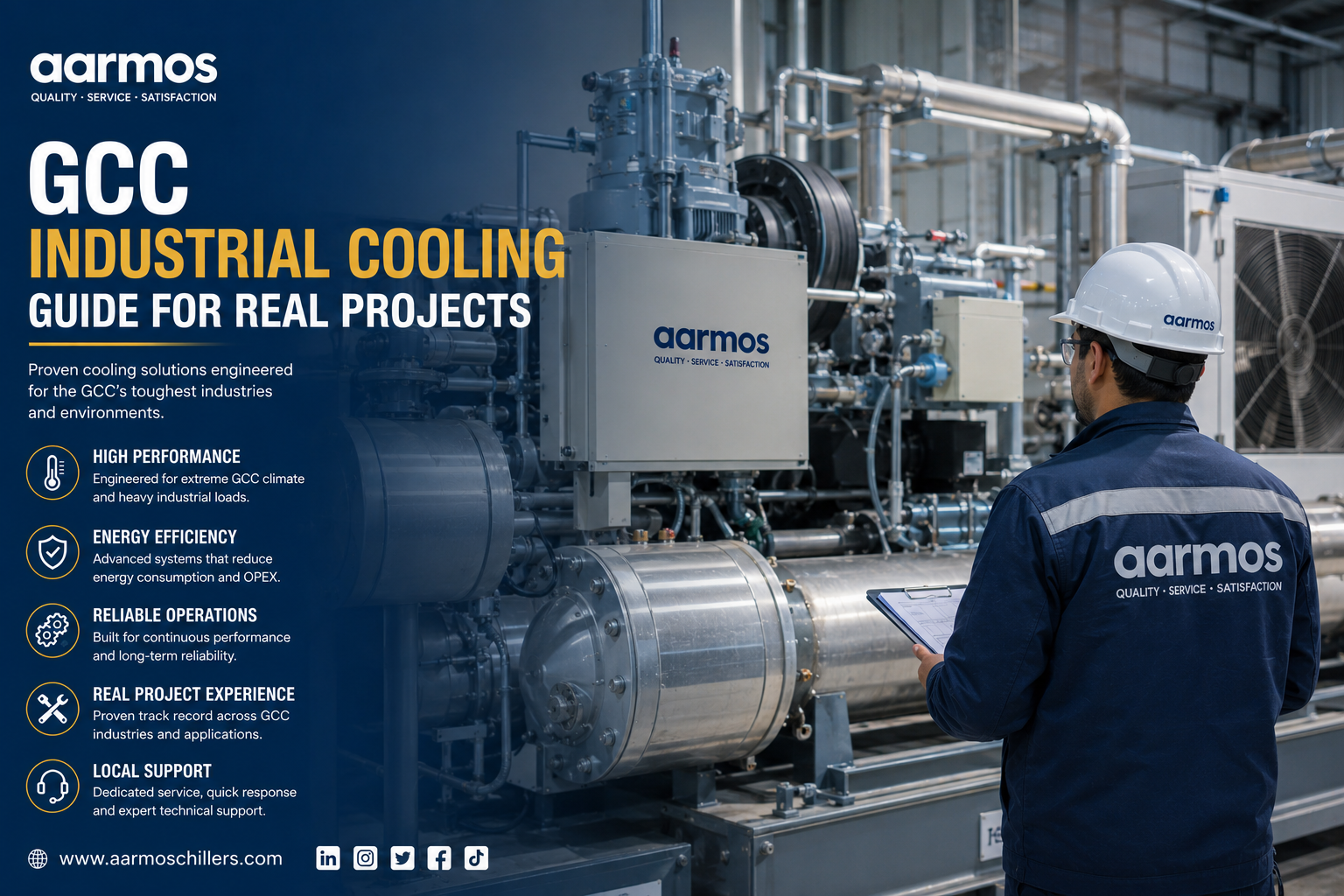
GCC Industrial Cooling Guide for Real Projects by AARMOS
A production line that runs well in Europe can struggle badly in the Gulf by its first summer. Ambient temperatures climb, condenser performance drops, process loads fluctuate, and suddenly a chiller that looked adequate on paper is causing stoppages, product quality issues, or repeated alarms. That is why a GCC industrial cooling guide needs to start with local operating conditions, not catalog data.
In the GCC, industrial cooling is rarely just about buying a machine. Engineers must match cooling capacity, system design, controls, water quality, and service support to the actual site conditions. For factory managers, MEP contractors, procurement teams, and healthcare operators, the wrong decision usually shows up as downtime, wasted energy, and avoidable maintenance.
What makes industrial cooling in the GCC different
The Gulf creates a very specific engineering environment. High ambient temperatures reduce the effective heat rejection capacity of air-cooled systems, especially during peak summer conditions. GCC facilities often experience dust accumulation on coils, unstable electrical conditions, and production cycles that change sharply across shifts or seasons.
That means equipment selection cannot rely on nominal ratings alone. Engineers may undersize a system that performs well under mild ambient conditions when they apply it in Dubai, Abu Dhabi, Sharjah, or other GCC locations. The cooling load also has to account for more than just the process itself. Several additional factors affect the final cooling requirement. These include pipe routing, tank exposure, pump heat, building ventilation, and simultaneous equipment operation.
This is where engineering matters. Engineers should design every industrial chiller or process cooling system around the site, the load profile, and the operating risk rather than the requested tonnage.
GCC industrial cooling guide: start with the load, not the unit
The first step is cooling load calculation. This sounds obvious, but many industrial cooling problems begin when a facility chooses a unit based on a rough estimate or on what was used at another site. In practice, two packaging lines with similar output can have different cooling demands because of resin temperature, machine cycling, room conditions, and water return temperature.
A proper load study begins by identifying the process heat source. Engineers then review the required outlet water temperature, return water temperature, flow rate, ambient design conditions, and runtime pattern. It should also examine whether the site needs a buffer tank, redundancy, variable pumping, or staged capacity control.
For example, a packaging factory may need tight temperature control to maintain product consistency and reduce reject rates. A food processing facility may require stable process cooling to protect hygiene, batch quality, and production speed. A dialysis cooling application has a different priority altogether – precise and dependable operation to support temperature-sensitive medical equipment.
When the load is calculated correctly, the rest of the system becomes easier to design. When the load is guessed, every downstream decision becomes a compromise.
Choosing the right cooling system for the application
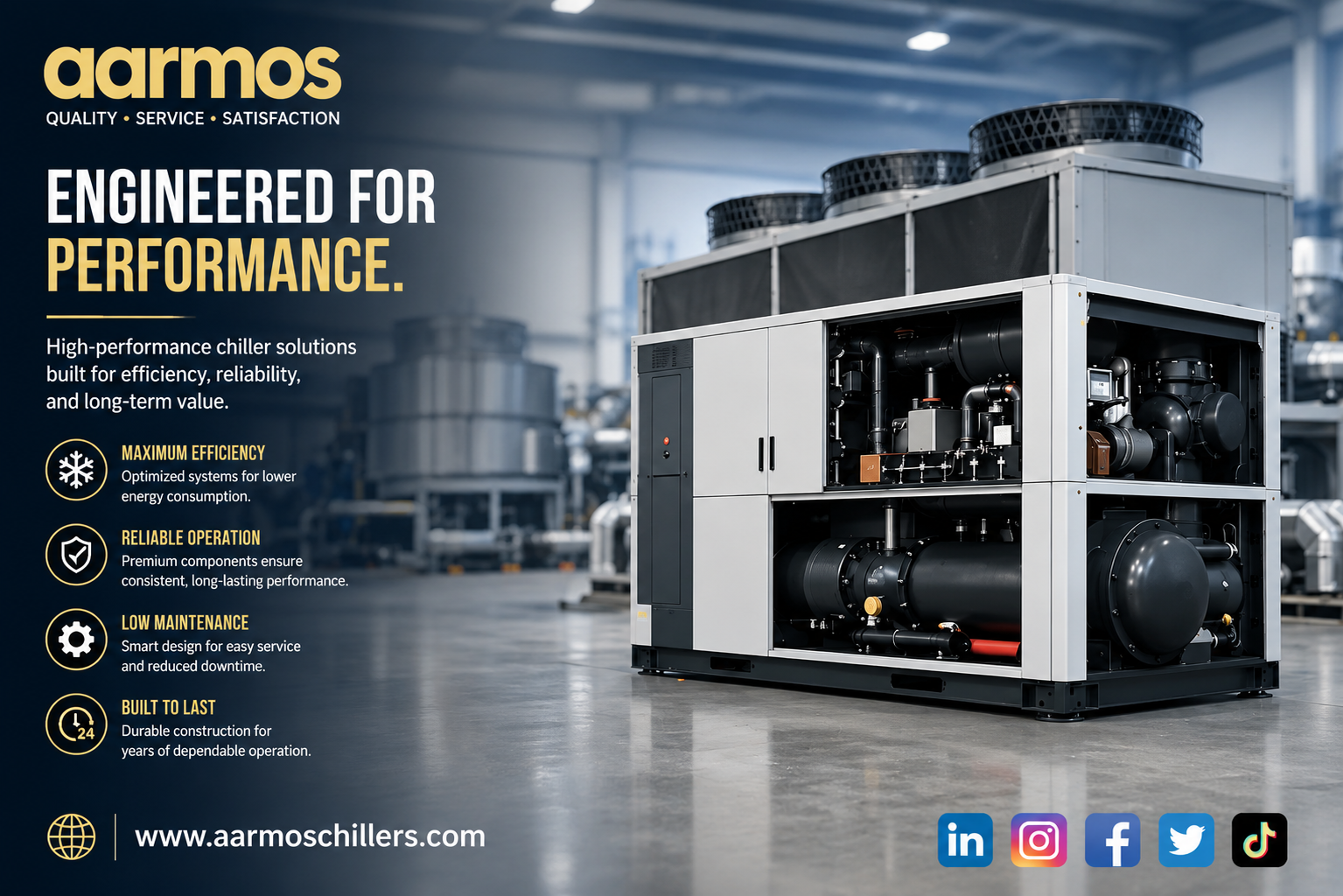
Not every site needs the same type of industrial cooling system. Air-cooled water chillers are often preferred in the GCC because they are practical to install and do not require cooling tower infrastructure. They suit many factories, commercial buildings, healthcare sites, and standalone process cooling projects. But they need proper coil sizing, condenser protection, and realistic derating for hot weather.
Water-cooled systems can offer efficiency benefits in the right environment, especially for larger facilities with stable operating conditions and the ability to maintain cooling towers and water treatment. The trade-off is added complexity. If maintenance discipline is weak, a theoretically efficient design can become unreliable.
Some processes also need more than a basic chiller. They may require insulated tanks, stainless steel piping sections, plate heat exchangers, secondary pumping arrangements, or control integration with machinery. In industrial process cooling, the chiller is only one part of the solution. The full system determines whether the result is stable and serviceable.
A practical project example from the field
A useful way to understand this is through a typical packaging factory application in the UAE. The customer was experiencing repeated production interruptions because process temperatures were drifting during peak afternoon conditions. The installed cooling setup had enough nominal capacity on paper, but it had not been selected for local summer ambient conditions and the hydraulic layout was not optimized.
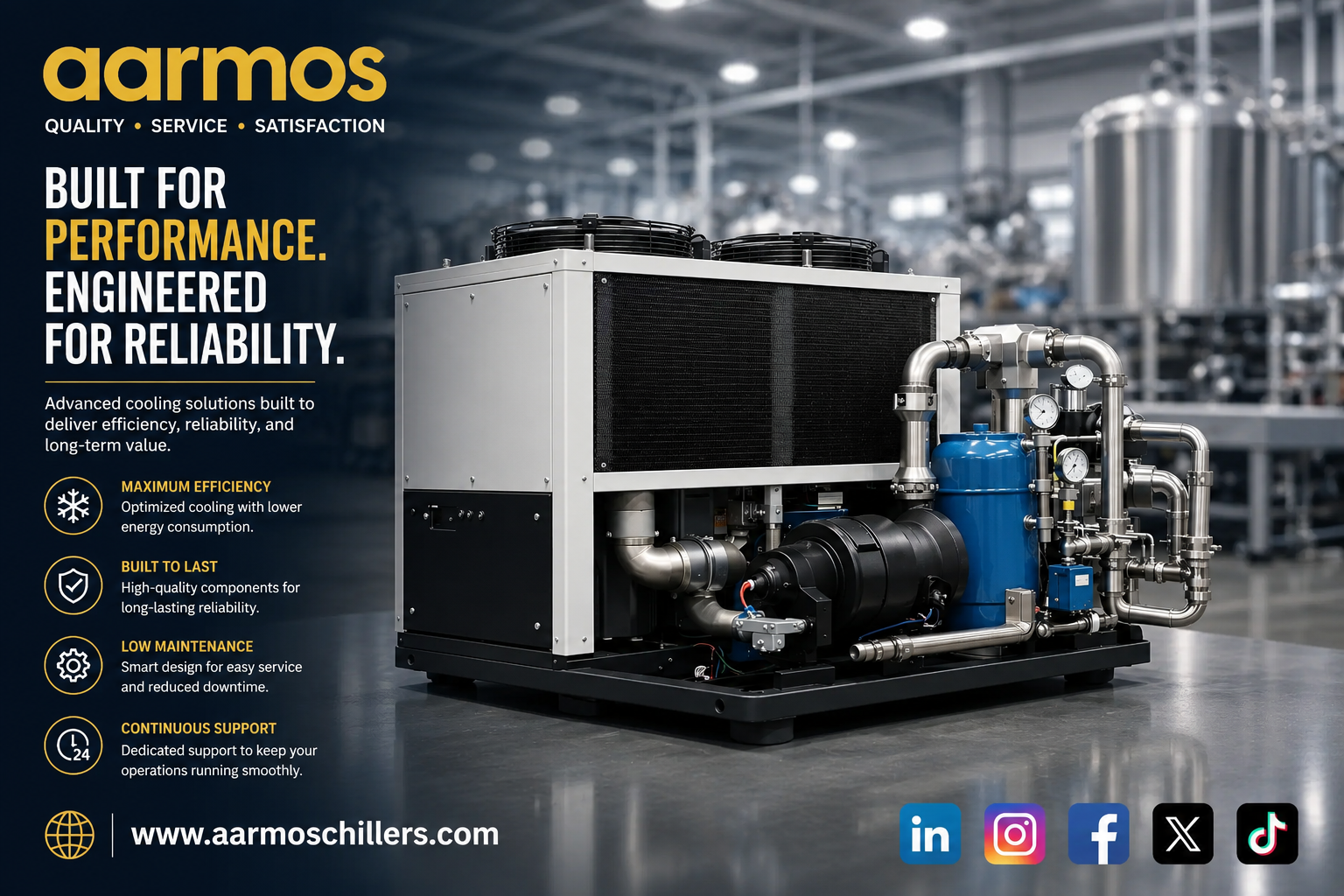
The solution began with a site review, operating data collection, and recalculation of the real cooling load. The revised design included an air-cooled industrial water chiller sized for GCC summer conditions, a properly selected circulation pump set, and a buffer arrangement to reduce short cycling. Control settings were also adjusted to improve temperature stability at the process side.
The measurable result was better line continuity, fewer high-temperature alarms, and more predictable process performance during long shifts. Just as important, the maintenance team had a system that was easier to monitor and service. This is the value of treating each installation as an engineering project rather than a box supply exercise.
Reliability is built into the details
In industrial cooling, reliability often depends on details that are overlooked during procurement. Compressor staging, coil design, control logic, pump head calculation, flow protection, and electrical integration all influence uptime. So does service access. If technicians cannot clean coils easily, inspect components safely, or isolate sections of the system without a shutdown, maintenance becomes reactive instead of preventive.
Material selection matters too. In coastal areas or dusty industrial zones, equipment should be specified with the operating environment in mind. Corrosion protection, filtration, and sensible installation positioning can extend service life significantly. The same applies to pipe insulation and control sensor placement. A system may look complete at handover but still underperform if these basics are wrong.
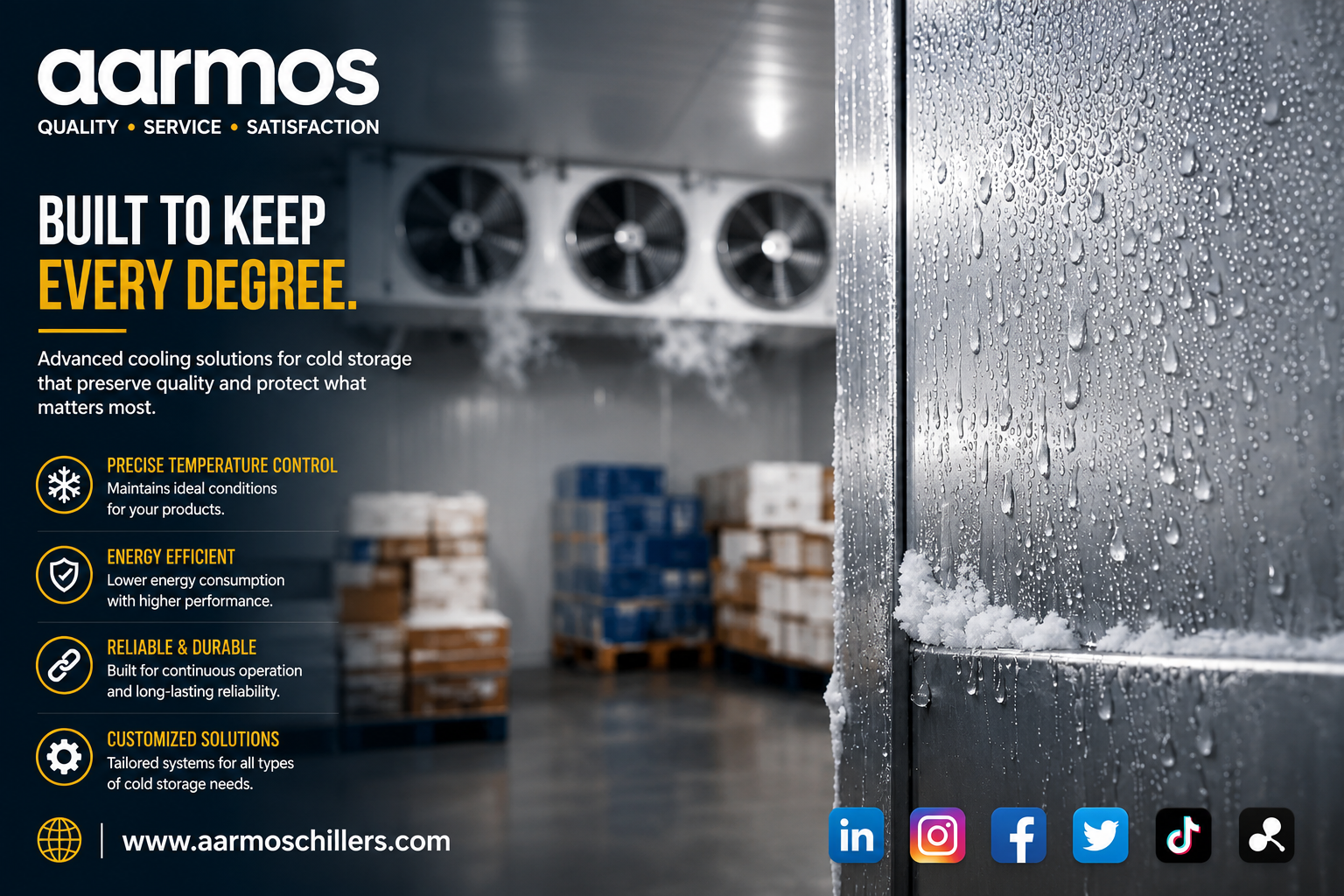
For facilities that cannot tolerate downtime, redundancy should be evaluated early. It is not necessary for every site, but in healthcare, critical process manufacturing, and cold storage applications, backup capacity can be more valuable than headline efficiency.
Energy efficiency is important, but only after stability
Many buyers focus first on power consumption, which is understandable. But the most efficient chiller is not the one with the best brochure figure. It is the one that maintains the required temperature under real site conditions without constant cycling, operator intervention, or emergency service calls.
In the GCC, energy efficiency comes from correct sizing, control strategy, condenser performance, water flow stability, and regular maintenance. An oversized unit may short cycle and waste energy. An undersized unit may run continuously and still fail to hold setpoint. Variable load facilities often benefit from staged or modular control rather than a single fixed-output approach.
Good engineering balances efficiency with durability and process stability. That balance changes by application. A cold room, a dialysis cooling system, and a plastic packaging line should not be evaluated with the same selection logic.
Service support is part of the system design
A cooling system is only as dependable as the support behind it. In the GCC, this matters because climate stress exposes weaknesses quickly. Fast response, preventive maintenance, spare parts planning, and practical troubleshooting are not extras. They are part of the ownership model.
Facilities should ask clear questions before selecting a provider. Does the team assess the load properly? Will they support installation and commissioning? Are they able to troubleshoot controls, flow issues, and field performance after startup? Do they understand the application itself, whether that is process cooling, cold storage, or medical equipment cooling?
An engineering-driven supplier brings more value here than a general trader because the conversation is about performance and outcomes, not just availability of stock. AARMOS approaches projects this way, with system design, equipment selection, installation support, and after-sales service aligned around long-term operation.
FAQs
What is the best type of chiller for industrial cooling in the GCC?
It depends on the application, site layout, and operating conditions. Air-cooled chillers are common because they are easier to install and maintain, but they must be selected for high ambient temperatures. Larger facilities may benefit from water-cooled systems if they can manage the added infrastructure and maintenance.
Why do chillers underperform during Gulf summers?
The most common reasons are undersizing, poor condenser heat rejection at high ambient temperatures, dirty coils, unstable water flow, and inaccurate load calculations. Systems selected using non-GCC design conditions often struggle during peak summer periods.
How do I know the right cooling capacity for my factory?
Capacity should be based on a proper cooling load calculation. This includes process heat, required temperature range, flow rate, ambient conditions, operating hours, and system losses. Using an approximate tonnage from a similar site is risky.
Is preventive maintenance really necessary if the unit is running fine?
Yes. In hot and dusty conditions, preventive maintenance helps protect efficiency, reduce emergency shutdowns, and extend equipment life. Coil cleaning, refrigerant checks, electrical inspection, and flow verification are especially important in GCC environments.
Can one chiller serve multiple processes?
Yes, if the hydraulic design, load diversity, control logic, and temperature requirements are compatible. In some cases, a central system works well. In others, separate circuits or dedicated units provide better stability and easier maintenance.
If your facility is planning a new cooling system or dealing with recurring performance issues, the best next step is not a faster quotation. It is a proper site and load review. Contact AARMOS to discuss your application, operating conditions, and the kind of cooling solution that will keep your project running when GCC summer puts it under real pressure.
Recent Comments
No comments to show.