July 4, 2026
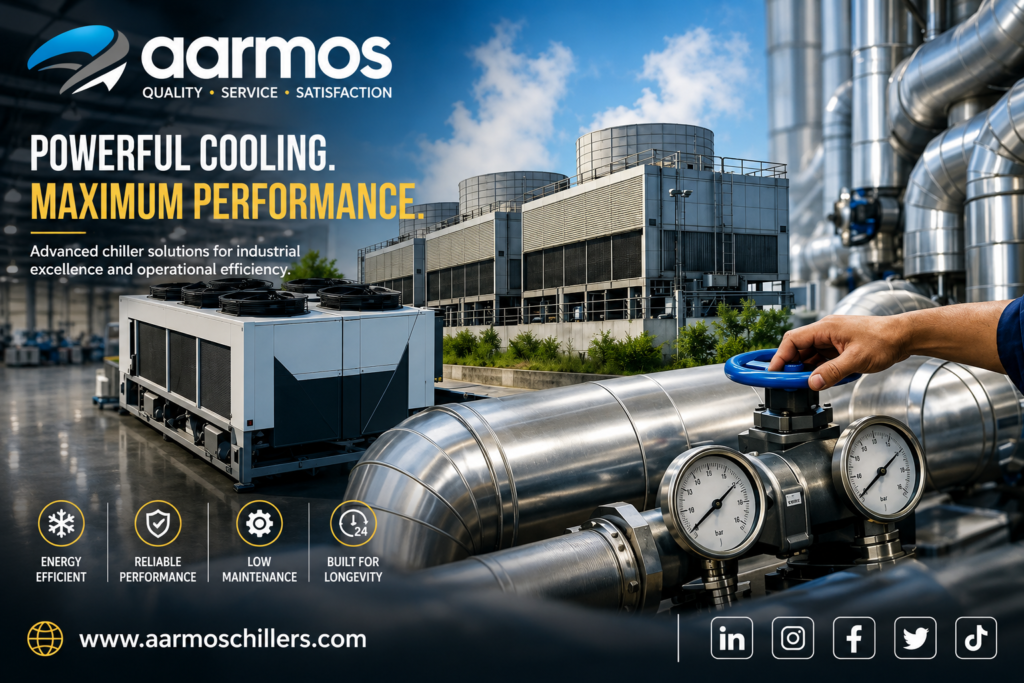
A packaging line that runs hot for even one shift can create a chain reaction – slower output, inconsistent sealing, higher reject rates, and stressed equipment. That is why top factory cooling upgrades are rarely just about lowering temperature. For factory managers and project teams, they are about protecting production stability, product quality, and maintenance budgets.
In real operating conditions, the right upgrade depends on what is overheating, when it happens, and how much variation the process can tolerate. A food processing plant has different cooling priorities than a plastics facility, and a cold storage operator faces very different risks than a packaging manufacturer. The best results come from engineering the upgrade around load, ambient conditions, operating hours, and service access rather than replacing equipment with a larger unit and hoping for improvement.
What makes the top factory cooling upgrades worth the investment
The most effective upgrades solve a measurable problem. In factories, that usually means one or more of four issues: production stoppages during peak ambient temperatures, poor temperature consistency in the process, high power consumption, or repeated breakdowns caused by undersized or aging cooling equipment.
An engineering-led review usually starts with cooling load calculation. That includes process heat, machine heat rejection, room conditions, operating schedule, water temperature requirements, and future expansion. This step matters because many cooling problems come from systems that are not technically wrong but no longer match the facility’s current production profile.
A factory that added a second shift, faster packaging equipment, or more heat-generating machinery may still be using a cooling system selected years earlier. In that case, the upgrade is not optional. It is a capacity correction.
Upgrade 1: Replace undersized units with properly selected industrial chillers
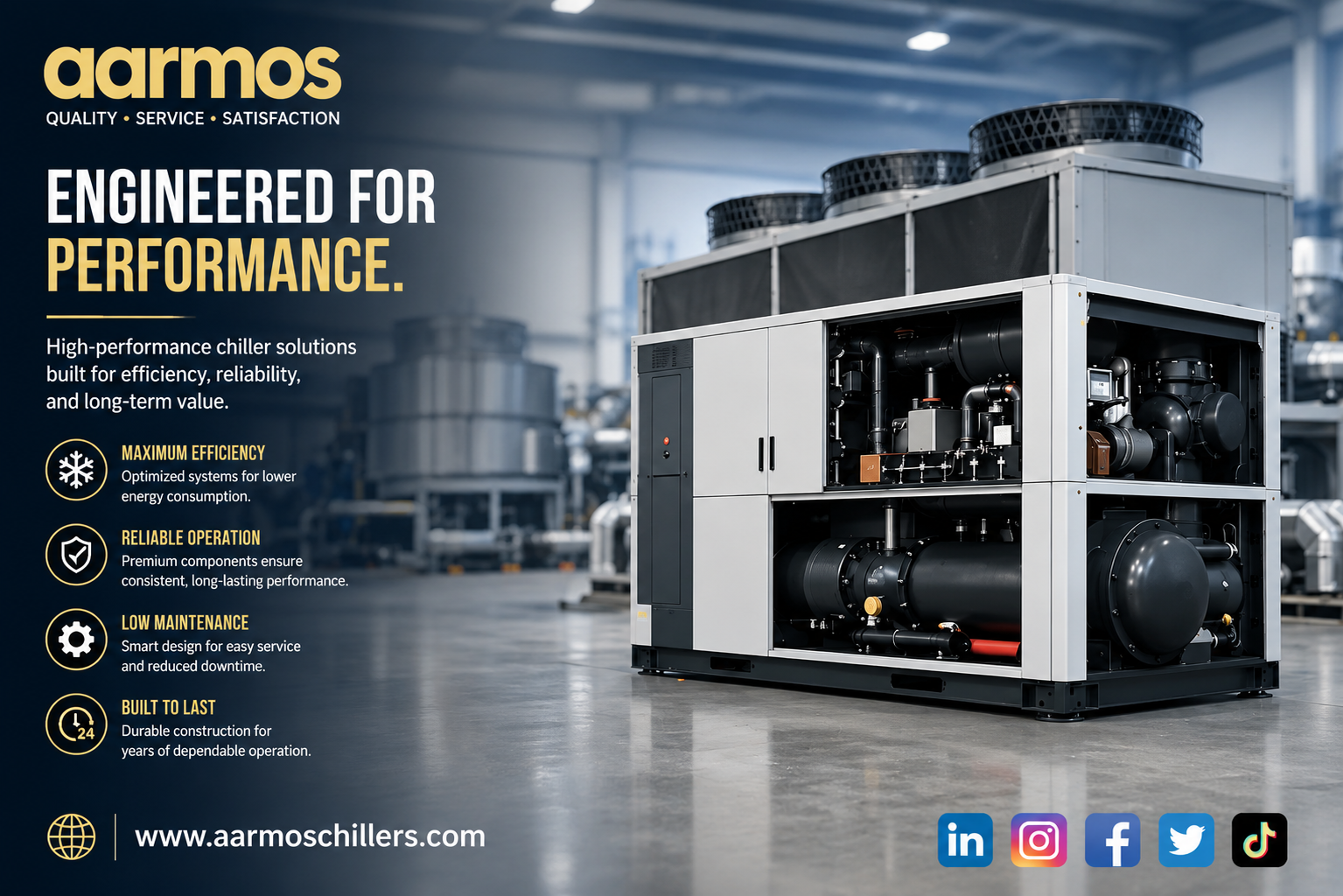
One of the top factory cooling upgrades is moving from marginal-capacity equipment to a properly sized industrial water chiller. This is especially common in packaging, food processing, and temperature-sensitive production where process water must stay within a tight range.
The practical benefit is not just lower temperature. It is stable leaving water temperature under variable load. That stability helps maintain machine performance, reduces nuisance trips, and protects production consistency. In a process cooling application, a 2 or 3 degree swing can be enough to affect material behavior, sealing quality, cycle time, or equipment reliability.
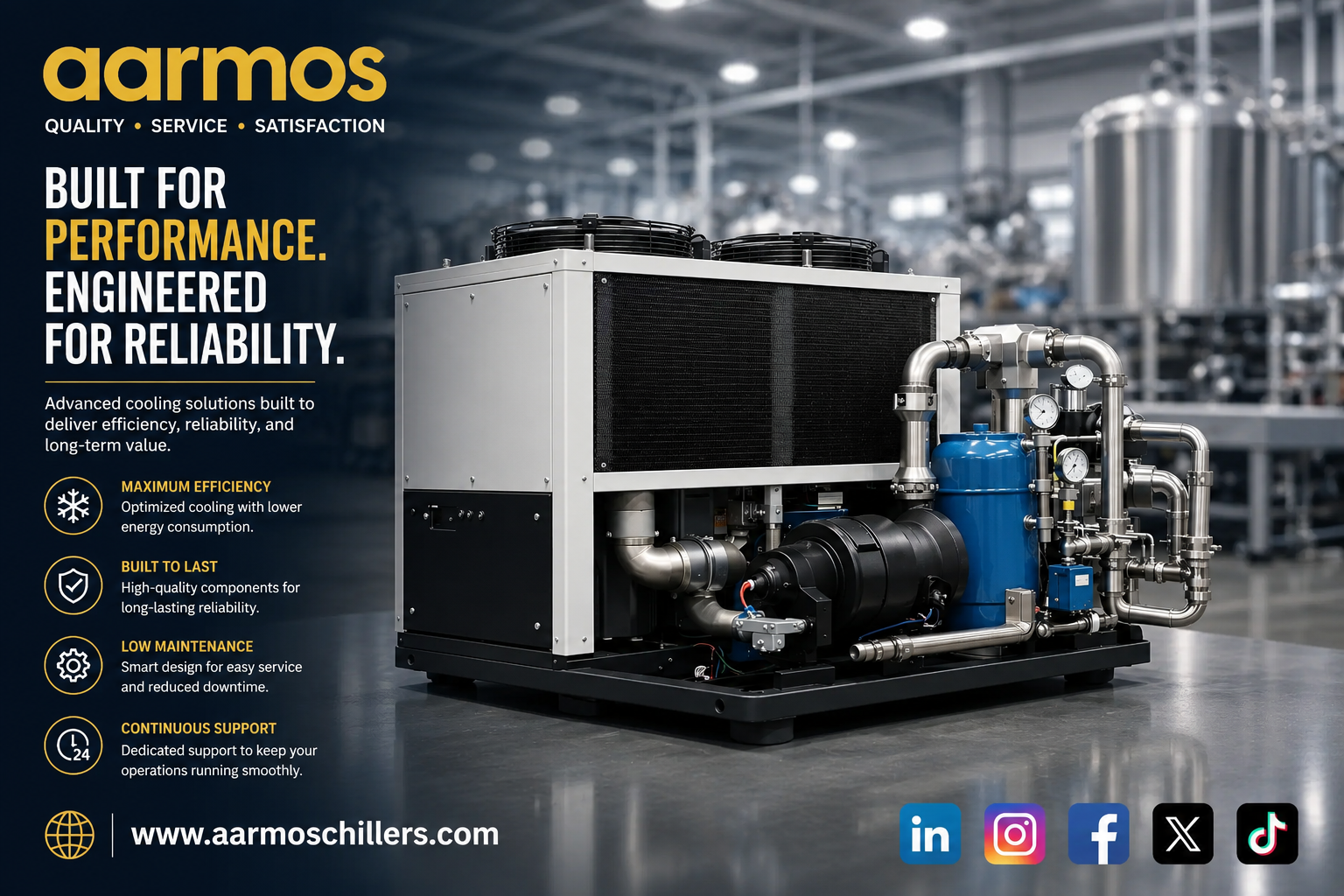
Air-cooled chillers are often preferred where water availability, installation simplicity, and maintenance access are key considerations. They work well in many factory environments across the GCC, but ambient temperature must be considered carefully. High outdoor temperatures can expose weak system design very quickly. In these cases, condenser sizing, airflow clearance, and control logic matter as much as nominal tonnage.
Where a factory has continuous high-load operation, a more detailed review of compressor staging, pump arrangement, and buffer tank sizing often delivers better real-world performance than simply increasing unit capacity.
Upgrade 2: Add buffer tanks and improve hydraulic stability
Some factories blame the chiller when the real issue is unstable water flow or rapid load fluctuation. Adding a correctly sized buffer tank is one of the most practical upgrades for systems experiencing short cycling, temperature hunting, or inconsistent process cooling.
A buffer tank increases system water volume, giving the chiller a more stable operating condition. That reduces compressor stress and improves temperature control at the point of use. In manufacturing plants where several machines start and stop throughout the day, this can make a noticeable difference in both equipment life and process performance.
Hydraulic upgrades also include balancing flow rates, correcting pipe sizing, and separating process loops where one unstable load is affecting the entire system. These are not always visible improvements, but they often solve the root cause instead of treating the symptom.
Upgrade 3: Install variable speed pumping and smarter controls
Factories with fixed-speed pumps often run the same flow regardless of actual demand. That wastes power and can create unnecessary pressure in the system. Upgrading to variable speed pumping allows the cooling system to respond more precisely to load changes.
The value of this upgrade shows up in energy use, but also in control quality. Better pump modulation helps maintain designed flow across production conditions instead of forcing the system into an all-or-nothing pattern. When paired with control sensors, temperature feedback, and sequencing logic, the result is a cooling system that behaves more like process equipment and less like a basic utility service.
This matters for facilities trying to reduce downtime while also controlling operating cost. The trade-off is that better controls require proper commissioning. If sensors are poorly placed or control settings are copied without site testing, the expected benefit can be lost.
Upgrade 4: Separate process cooling from comfort cooling
A common factory issue is trying to use one system for two very different jobs. Office comfort cooling and process cooling do not behave the same way. Process loads can be sudden, continuous, and sensitive to small temperature changes. Comfort systems are designed around occupancy and room conditions, not machine heat removal.
Separating these loads is one of the top factory cooling upgrades for facilities with repeated process instability. A dedicated process cooling system gives operations teams tighter control over the temperature that actually affects production. It also prevents process load spikes from affecting occupied spaces or vice versa.
In practice, this can mean installing a dedicated industrial chiller for the production line while leaving packaged comfort equipment to serve administrative or low-priority areas. The capital scope is higher than a simple retrofit, but the operational clarity is usually worth it.
Upgrade 5: Improve heat rejection and condenser performance
In hot climates, heat rejection is often the weak point. A chiller may appear to have enough capacity on paper, but poor condenser airflow, dirty coils, restricted installation space, or high ambient recirculation can reduce actual performance.
Upgrading condenser fans, increasing airflow clearance, cleaning and restoring heat exchange surfaces, or redesigning the installation layout can produce a measurable improvement without replacing the entire system. This is particularly relevant for factories where equipment was installed in tight yards, enclosed service areas, or rooftop zones with poor ventilation.
For one industrial process cooling review, a recurring high-pressure trip problem was traced not to refrigerant charge or compressor fault, but to condenser air recirculation caused by surrounding barriers. Correcting the installation environment resolved the issue more effectively than repeated service interventions.
Upgrade 6: Add redundancy where downtime is expensive
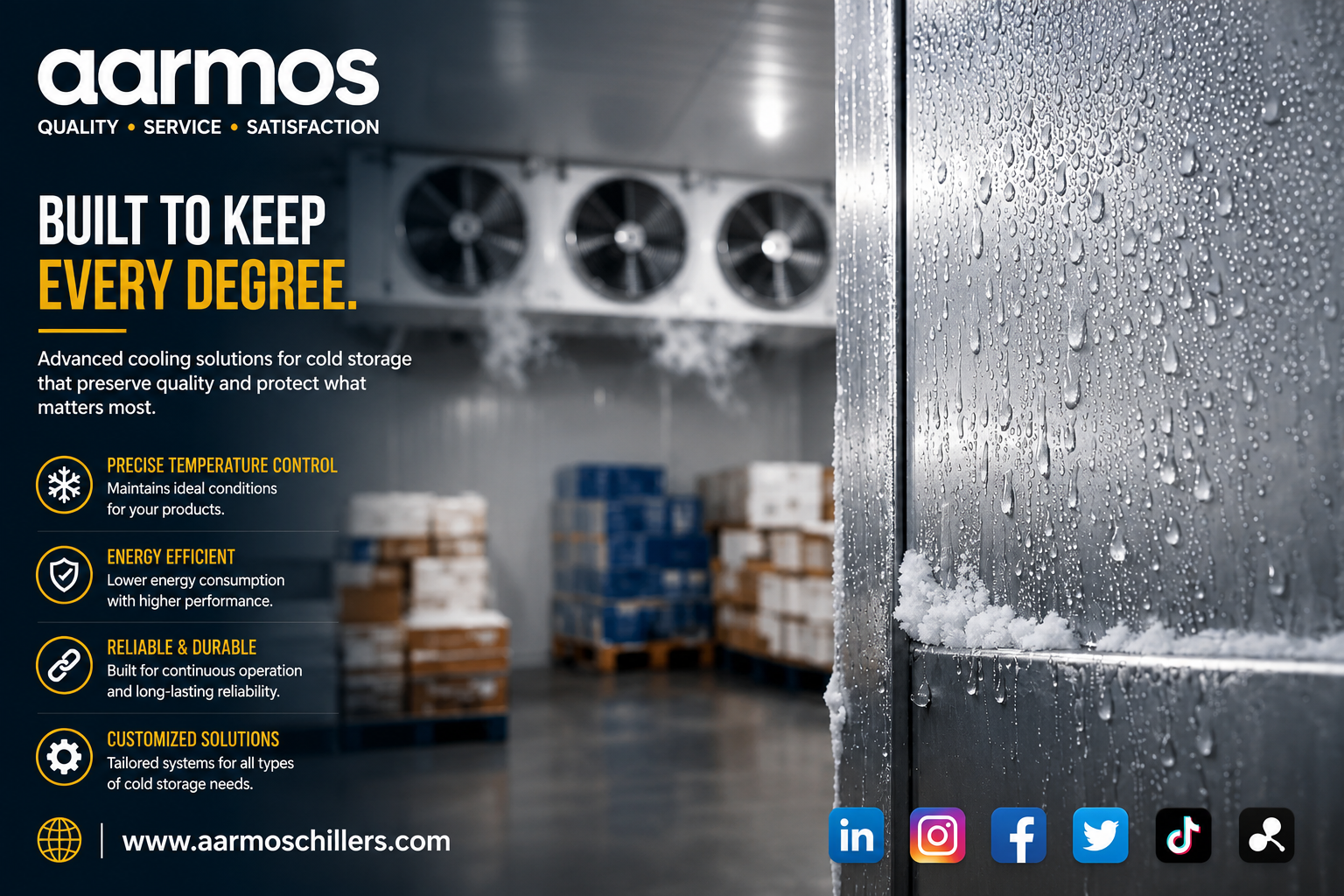
Not every factory needs N+1 redundancy, but some absolutely do. Food processing, healthcare-related production, cold storage, and continuous manufacturing lines often cannot tolerate a single point of cooling failure.
Redundancy can be built through dual chillers, standby pumps, automatic changeover controls, or separate cooling circuits for critical and non-critical loads. The engineering question is not whether redundancy sounds good. It is how much downtime costs compared to the added system complexity.
In facilities where product loss, machine damage, or missed delivery windows have serious consequences, redundancy is one of the most sensible upgrades available. It also improves maintenance planning because service can be performed without stopping the entire operation.
How to judge which cooling upgrade fits your factory
The right path depends on production risk, not just equipment age. Facilities experiencing high reject rates during the hottest months often benefit from tighter process control. Rising energy use without higher production usually indicates that pumping or control upgrades will deliver better returns. Frequent failures during peak production often point to the need for redundancy and a complete load reassessment.
A proper site assessment should review supply and return temperatures, flow rates, machine requirements, ambient conditions, operating schedule, and maintenance history. It should also consider future load growth. The best cooling upgrade is the one that still fits when production expands.
For customers across manufacturing, packaging, cold storage, and specialized cooling applications, AARMOS approaches upgrades as engineered solutions rather than equipment swaps. That means reviewing the actual thermal problem, selecting the right industrial water chiller or process cooling arrangement, and supporting installation, commissioning, and after-sales service with long-term reliability in mind.
FAQ on top factory cooling upgrades
What is the most common factory cooling upgrade?
The most common upgrade is replacing an undersized or aging chiller with a properly selected industrial process cooling system. In many facilities, this is combined with hydraulic improvements such as buffer tanks or pump upgrades.
Do factory cooling upgrades always reduce energy use?
Not always. Some upgrades are primarily about reliability or process stability. However, variable speed pumps, better controls, correct equipment sizing, and improved heat rejection often reduce energy waste as well.
When should a factory add redundancy?
Redundancy makes sense when cooling failure would cause product loss, long downtime, safety concerns, or contractual delivery problems. It is especially valuable in cold storage, food processing, and continuous production environments.
Can one chiller serve multiple factory processes?
Yes, but only if the loads are compatible and the hydraulic design supports stable operation. Where one process causes temperature fluctuations that affect another, separate loops or dedicated cooling systems are usually the better choice.
Why do some chillers fail during summer even though they work the rest of the year?
This usually points to marginal capacity, weak heat rejection, poor airflow, dirty coils, or a system that was never designed for peak ambient conditions. Summer exposes design limitations very quickly.
If your factory is seeing rising temperatures, nuisance shutdowns, or uneven process performance, the next step is not guessing at a bigger unit. It is understanding the load, the operating conditions, and the consequences of getting cooling wrong. Contact AARMOS to assess your facility and identify a practical upgrade path built around dependable performance, service support, and long-term value.
Recent Comments
No comments to show.