July 4, 2026
When a production line in the Gulf loses temperature control for even an hour, the problem is rarely limited to comfort. Product quality shifts, machine efficiency drops, downtime spreads across departments, and maintenance teams get pulled into emergency mode. That is why GCC process cooling systems need to be engineered for local operating reality, not selected from a generic catalog and installed with hope.
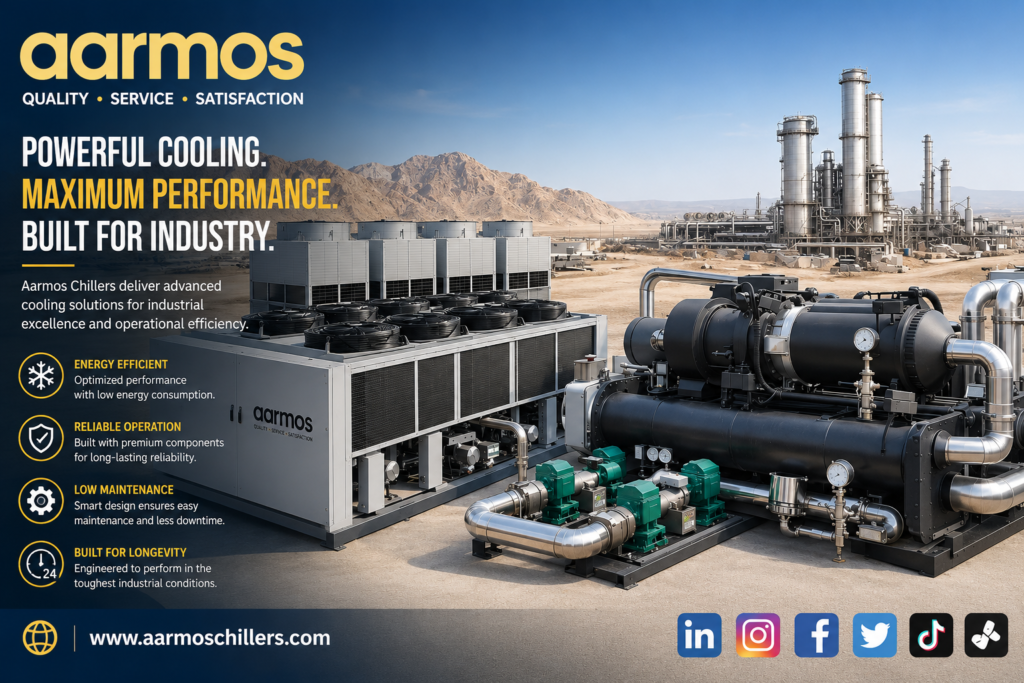
In the GCC, process cooling works under harder conditions than many standard designs assume. High ambient temperatures, airborne dust, fluctuating utility conditions, and long operating hours put constant pressure on chillers, pumps, heat exchangers, and control systems. For factories, food processors, packaging plants, healthcare facilities, and cold storage operators, the right system is the one that keeps temperature stable when the site is under maximum load, not only when the weather is mild.
What makes GCC process cooling systems different
A process cooling system in Dubai, Abu Dhabi, Sharjah, or elsewhere in the Gulf has to handle a wider gap between design conditions and ideal lab conditions. Air-cooled systems perform very well in the GCC when engineers select condenser sizing, airflow management, and control logic for high ambient operation. If the unit is undersized or chosen based on moderate climate assumptions, capacity can fall exactly when the process needs it most.
Water quality and dust are also practical engineering issues. Fouling in heat exchangers, clogged coils, blocked filters, and scale formation can reduce heat transfer and increase power consumption. A system that looks acceptable on paper can become expensive and unstable when designers ignore maintenance access, filtration, and service intervals.
This is where engineering matters more than equipment labels. Engineers should calculate the cooling load from the actual process, including product temperature, machine heat rejection, ambient conditions, operating schedule, future expansion, and critical tolerance bands. A packaging line that runs intermittently needs a different control strategy from a food processing line that operates continuously. A dialysis cooling application demands tighter reliability and temperature consistency than many general industrial applications. The system design should reflect those differences.
Designing GCC process cooling systems around the process
The strongest projects start with one question: what exactly must stay cool, and within what temperature range? That sounds simple, but many site issues begin when cooling systems are sized around equipment brochures instead of measured operating conditions.
For industrial process cooling, engineers usually look at four core elements. The first is heat load, including both steady and peak demand. The second is fluid temperature requirement, because some processes need chilled water near 44 to 50 F while others can run effectively at higher temperatures. The third is circulation, which means pump head, pipe sizing, tank arrangement, and flow stability. The fourth is environmental stress, especially roof temperature, dust exposure, and ventilation around the equipment.
In the GCC, conservative design often saves money over the life of the system. That does not mean oversizing everything. It means selecting equipment that can maintain capacity under real summer conditions, providing enough buffer for process variation, and designing pipework and controls to avoid temperature swings. Oversizing can create short cycling, wasted energy, and poor humidity control in some applications. Undersizing creates chronic downtime. The correct answer is almost always based on site data.
Air-cooled or water-cooled?
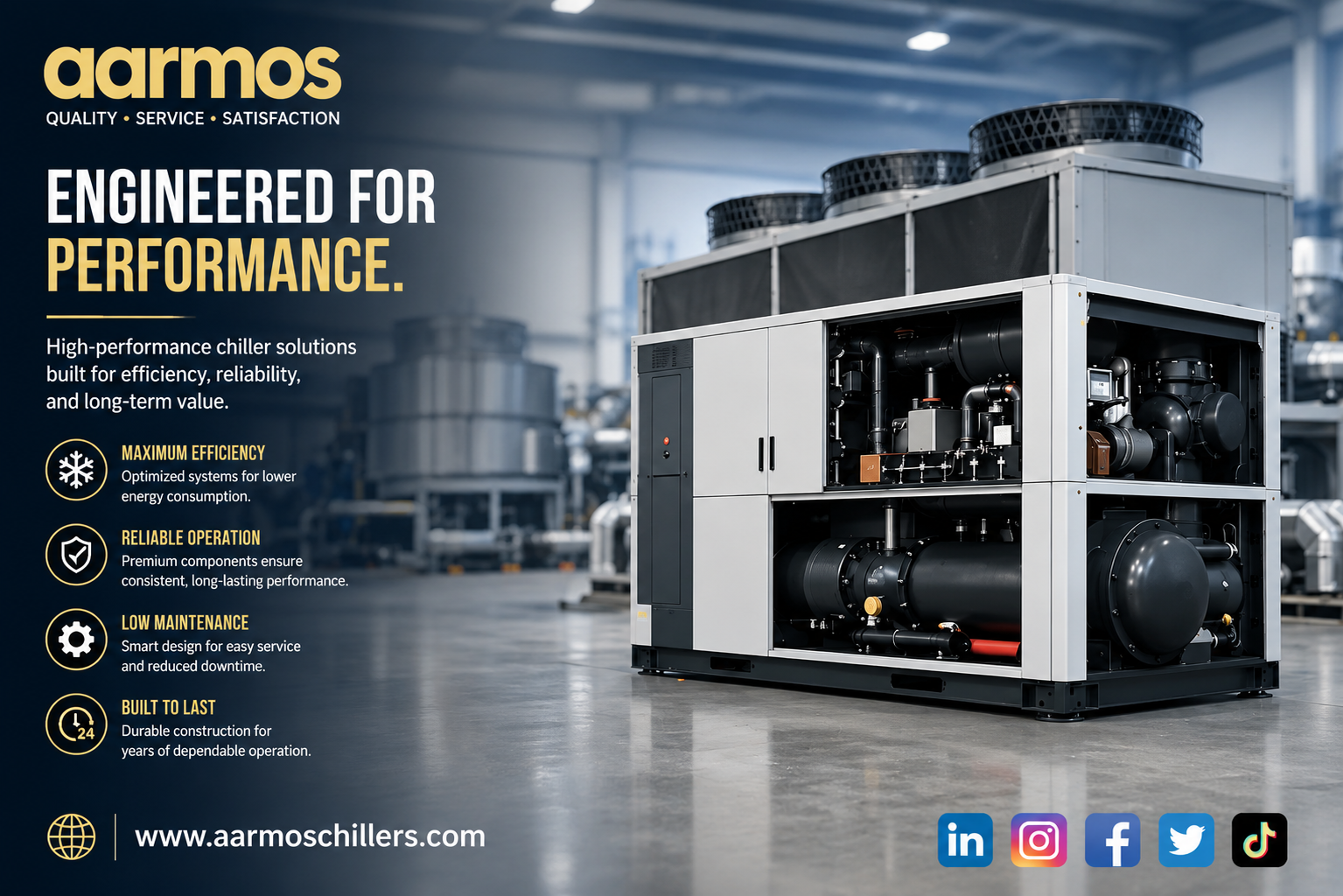
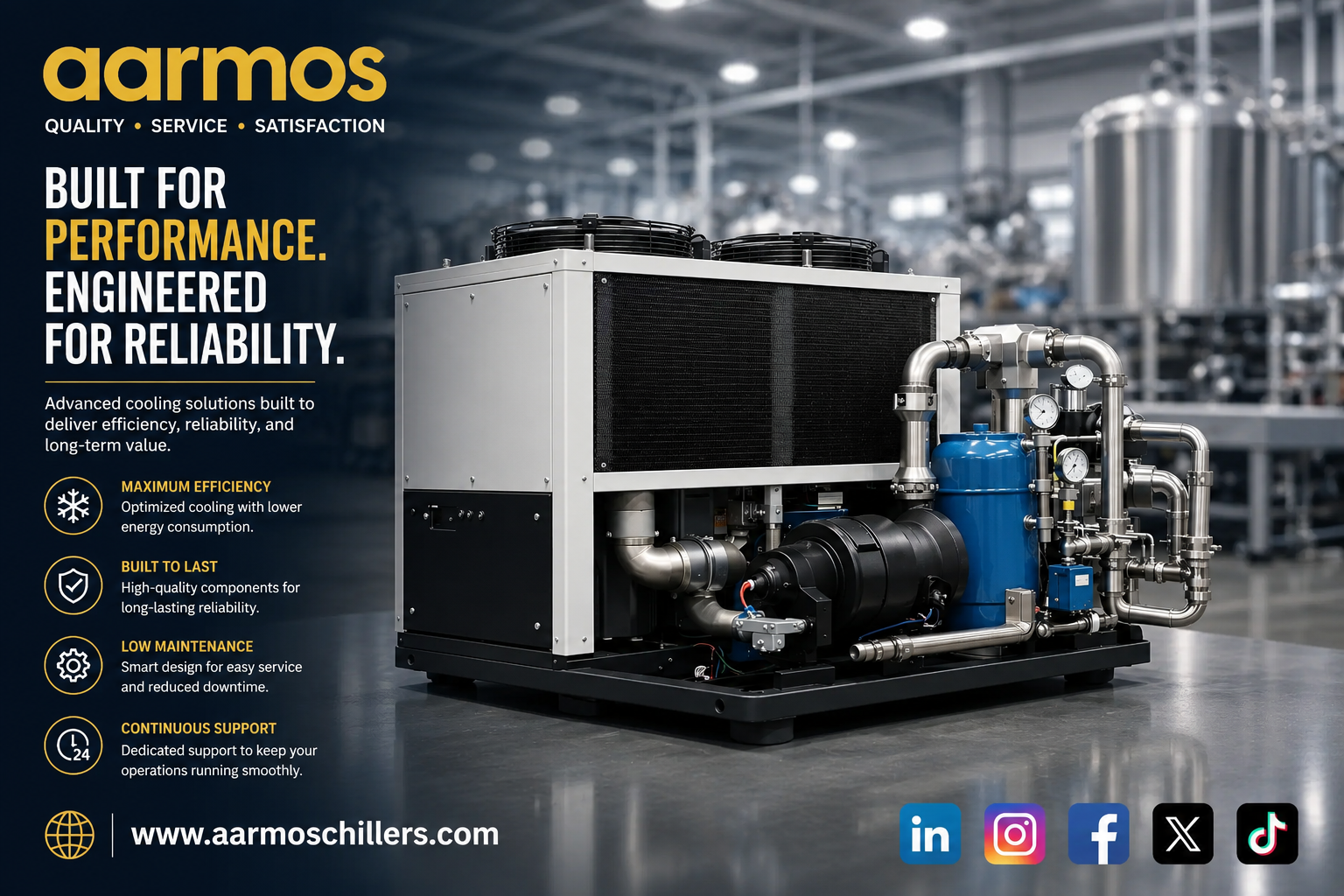
For many Gulf projects, air-cooled chillers are preferred because they simplify installation and water management. They are practical for factories, villas, commercial buildings, and many process applications where water infrastructure is limited or simplicity is a priority. But performance depends heavily on coil quality, condenser surface area, fan control, and clear airflow.
Water-cooled systems can offer strong efficiency in the right facility, especially where cooling towers and water treatment are already part of the plant infrastructure. The trade-off is higher system complexity and more demanding maintenance. For some operators, that is worthwhile. For others, the added maintenance burden outweighs the efficiency benefit.
Why controls matter as much as tonnage
A process cooling system should not only produce cooling. It should react correctly to load changes. Variable flow demand, multiple machines turning on and off, and seasonal ambient shifts all affect stability. Good controls protect compressors, reduce cycling, maintain leaving water temperature, and make troubleshooting faster.
Alarm logic, sensor placement, pump interlocks, and staged compressor operation are not minor details. On a busy site, they often determine whether the cooling system quietly supports production or repeatedly interrupts it.
Common applications across the Gulf
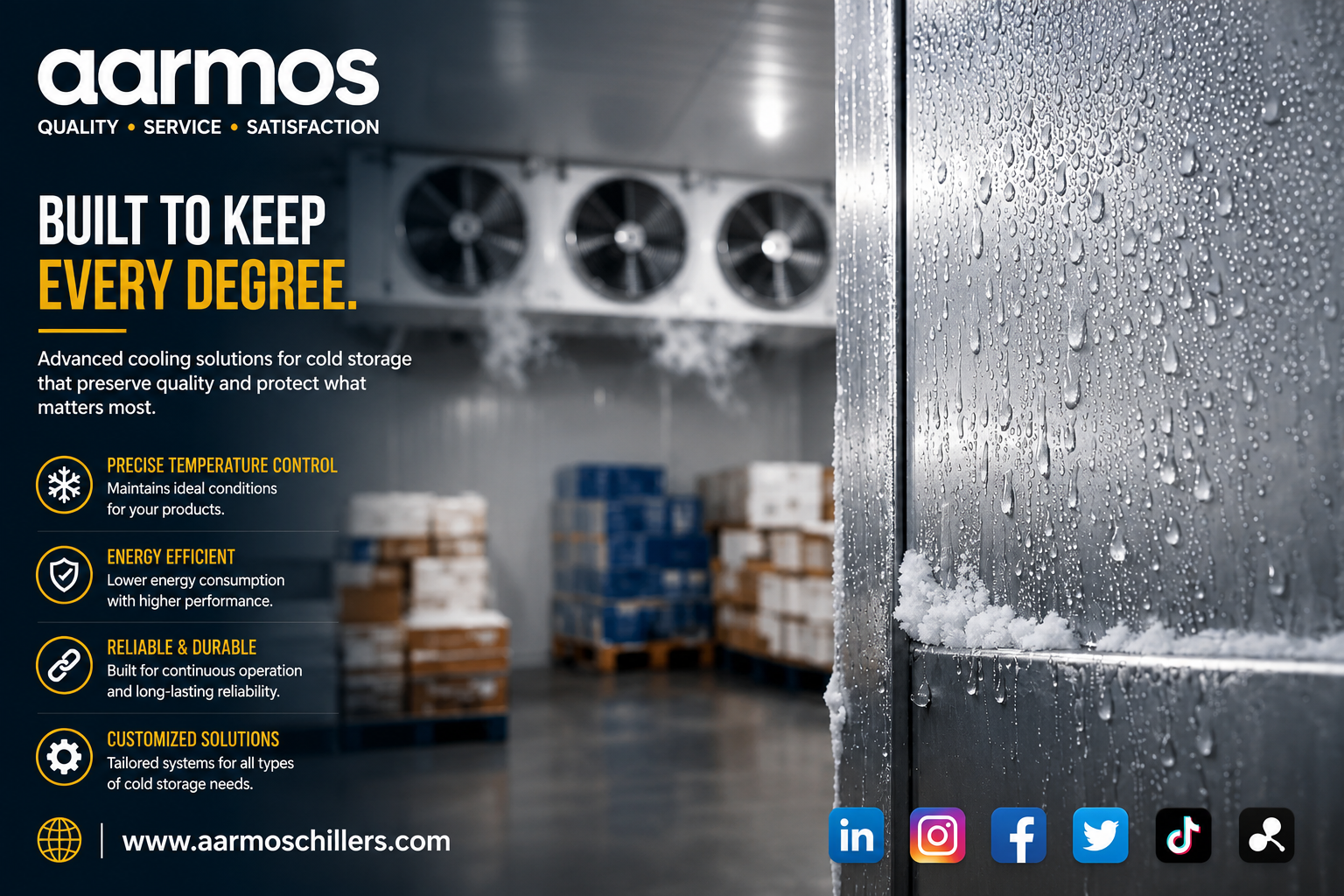
Packaging and plastic processing facilities are among the most demanding users of process cooling. If mold temperatures drift or line cooling becomes unstable, product dimensions and finish quality can change quickly. In food processing, poor cooling control can affect both hygiene and shelf life. In cold storage support areas, process cooling may protect equipment rooms, product handling zones, or pre-cooling operations.
Healthcare applications bring another layer of responsibility. Dialysis cooling systems, for instance, require stable operation because equipment performance directly affects patient care environments. In these installations, redundancy, temperature consistency, and service response matter as much as nominal cooling capacity.
Commercial and institutional sites also rely on process-type cooling in specialized zones. Laboratories, production kitchens, technical rooms, and temperature-sensitive storage areas often need dedicated cooling independent from general comfort air conditioning. That separation can improve reliability because the process load is managed as its own engineering requirement.
A practical project approach that reduces downtime
The best outcomes usually come from a full-cycle approach: assess, calculate, design, supply, install, and support. When these stages are disconnected, problems tend to appear after handover. The equipment may be good, but the system may still struggle because flow rates were wrong, controls were simplified, or site conditions changed during installation.
An engineering-driven cooling partner will typically start with cooling load calculations and operating assumptions. Then comes equipment selection, such as air-cooled water chillers, pumps, insulated buffer tanks, plate heat exchangers, or application-specific controls. Installation quality matters just as much. Poor piping layout, inadequate insulation, low-quality electrical terminations, and weak drainage planning can turn a sound design into a service-heavy system.
Field experience in GCC conditions is especially valuable here. A contractor who has worked on packaging factories in Sharjah or food-related cooling applications in Dubai will usually pay attention to details that generic installers may miss, such as rooftop heat buildup, access for coil cleaning, and the need to isolate critical loads during maintenance.
What reliable performance looks like
A reliable process cooling system is not simply one that starts and stops. It maintains temperature within the process requirement, avoids nuisance trips, allows maintenance without production disruption where possible, and keeps energy use under control. Measurable indicators include stable leaving water temperature, reduced compressor cycling, lower service call frequency, and fewer quality complaints from the production team.
In real projects, the biggest customer benefit is often reduced interruption. If a plant previously faced recurring overheating alarms, product rejection, or emergency shutdowns, a properly engineered cooling system can restore predictable operation. That predictability has value across maintenance, procurement, and operations, even if it does not appear as a single line item on a report.
Maintenance is part of the system design
Too many cooling systems are designed as if maintenance is optional. In the Gulf, it is not. Dust loading, water quality, and high ambient operation make preventive service essential. Coils need cleaning access. Filters must be easy to inspect. Pumps and valves should be located so technicians can work safely and quickly. Control panels need clear labeling and sensible fault history.
The systems that last are usually the ones designed to be serviced without friction. That is a design choice, not just a maintenance choice.
FAQ about GCC process cooling systems
What type of chiller is best for GCC process cooling systems?
It depends on the application, site conditions, and utility setup. Air-cooled chillers are common in the GCC because they are simpler to install and maintain, but they must be selected for high ambient operation. Water-cooled systems can work very well in larger facilities with the right infrastructure and maintenance capability.
How are process cooling loads calculated?
Cooling loads are based on machine heat rejection, product temperature pull-down, ambient heat gain, operating hours, fluid flow, and required supply temperature. A proper calculation should include peak load, not only average load.
Can one system serve multiple process areas?
Yes, but only if zoning, flow balance, and controls are handled correctly. Shared systems can improve efficiency, but they may also spread risk if a single fault affects multiple production areas. Critical processes sometimes need dedicated circuits or backup capacity.
How often should a process cooling system be serviced in the GCC?
Service intervals depend on environment and usage, but high-temperature and dusty sites usually require more frequent inspection and coil cleaning than mild-climate installations. Preventive maintenance is far more cost-effective than repeated emergency shutdowns.
Are customized systems better than standard packaged units?
Not always. Standard packaged units are suitable for many applications if they match the load and site conditions. Customization becomes valuable when the process has tight temperature tolerance, unusual operating cycles, limited installation space, or future expansion needs.
If you are planning, replacing, or troubleshooting GCC process cooling systems, the right next step is not guessing the chiller size. It is reviewing the process, the load, and the site conditions with an engineering team that understands how cooling systems perform in real Gulf environments. AARMOS supports customers with application review, load calculation, equipment selection, installation guidance, and after-sales support for projects that need dependable results. Contact the team to discuss your site and identify a cooling solution built for long-term performance.
Recent Comments
No comments to show.