Pool Water Temperature Control That Works
A pool that looks perfect can still be unpleasant to use if the water temperature is wrong. In the UAE and across the GCC, pool water temperature control is not a luxury add-on. It is a practical requirement for comfort, usability, water quality, and operating efficiency. For villa owners, hotels, resorts, and facility managers, the real question is not whether to control pool temperature, but how to do it reliably in demanding outdoor conditions.
Why pool water temperature control matters
Water that is too warm feels flat, uncomfortable, and less refreshing in peak summer. Water that is too cold during winter or shoulder months reduces pool usage and can create complaints from residents, guests, or users. In commercial settings, temperature inconsistency can also affect customer satisfaction, scheduling, and maintenance planning.
There is also an engineering side to the issue. Warm water encourages faster biological activity and can increase sanitizer demand. Temperature swings place extra stress on equipment and make it harder to maintain stable operating conditions. Good pool water temperature control supports a more predictable environment, which is especially valuable for high-use pools in villas, hospitality properties, and institutional facilities.
What actually affects pool temperature
Many pool owners assume sunlight is the only factor. It is a major one, but not the whole picture. Air temperature, wind exposure, pool depth, surface area, shading, bather load, circulation hours, and surrounding hardscape all influence how quickly a pool gains or loses heat.
In the UAE, direct solar gain is often the dominant reason pool water overheats. A shallow pool with long sun exposure and limited shading can rise well beyond the comfort range during the hottest months. On the other hand, pools used in the evening or early morning may need heating support in cooler periods, especially in open or windy locations.
This is why proper equipment selection starts with cooling load and heat gain calculations, not guesswork. A system that works for one villa in Dubai may be undersized or oversized for a hotel pool in Abu Dhabi or a private residence in Al Ain.
The main options for pool water temperature control
For most projects, the best approach depends on whether the priority is cooling, heating, or year-round control.
Pool chillers for cooling-heavy applications
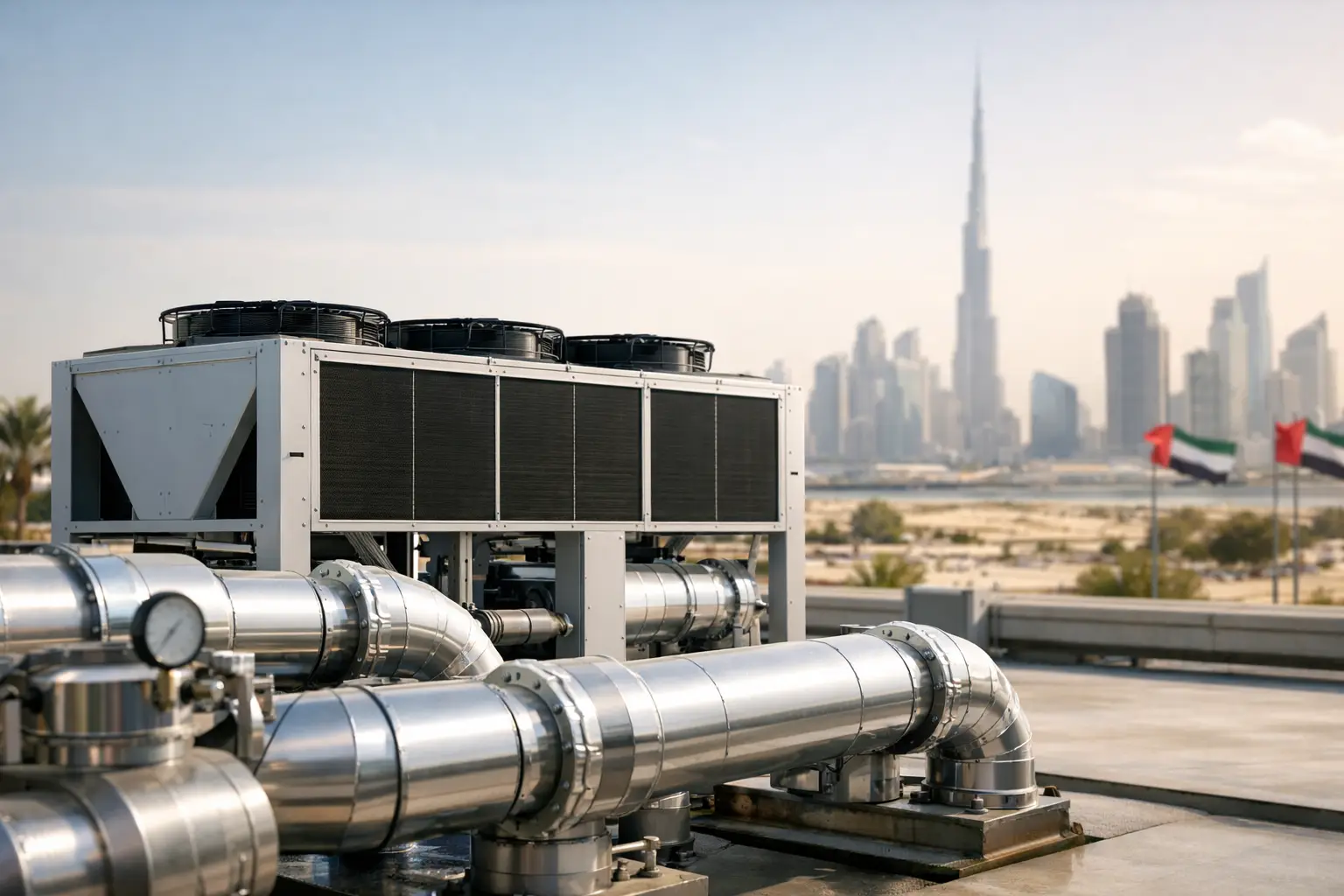
A pool chiller is designed to remove heat from pool water and keep it within a target temperature range. This is often the preferred solution for outdoor pools in hot climates where overheating is the main concern. Chillers are especially useful for villas, resorts, and leisure pools exposed to strong summer sun for most of the day.
A properly selected air-cooled pool chiller typically includes a titanium heat exchanger for corrosion resistance, weather-resistant casing, circulation integration, and automated controls for stable operation. The engineering value is in matching the chiller capacity to the actual pool volume, turnover rate, and site conditions.
An undersized chiller may run continuously and still fail to achieve the setpoint. An oversized unit may cycle inefficiently and increase wear. The right design balances performance, energy use, and equipment life.
Heat pumps for moderate climates or dual-season use
Heat pumps are often selected where heating is the primary need or where moderate year-round adjustment is enough. They can be effective for extending swim seasons and improving user comfort during cooler months. However, in regions with extreme summer heat, a heat pump alone may not solve overheating problems as effectively as a dedicated cooling solution.
This is where many projects benefit from a more application-specific review. If a customer says, “We need comfortable water all year,” the right answer depends on actual site behavior, not just equipment labels.
Integrated solutions for year-round stability
Some facilities need both heating and cooling performance, especially commercial properties with high occupancy expectations. In these cases, integrated temperature control systems with smart controls, automation, and carefully sized circulation components provide the most consistent results.
The key is not just installing a machine. It is designing a system that works with the filtration loop, site layout, electrical capacity, and maintenance practices.
Engineering first, equipment second
The most common mistake in pool projects is selecting equipment by pool size alone. Volume matters, but it is only one variable. A 60 cubic meter pool in a shaded courtyard behaves differently from a 60 cubic meter rooftop pool with full afternoon exposure.
An engineering-focused approach typically starts with a few core questions. What temperature range is required? Is the issue summer overheating, winter cooling, or both? How many hours per day is the pool in use? What is the circulation rate? Is there existing plant room space, pipework access, and power availability?
From there, cooling load calculations guide equipment selection. Technical specifications such as compressor type, heat exchanger material, ambient operating range, and control accuracy become meaningful only when tied to the actual application.
This is where an experienced cooling partner brings more value than a general trader. The process should include system assessment, load calculation, equipment matching, installation planning, and after-sales support.
A practical project example
A useful example is a private villa pool with strong sun exposure and repeated complaints that the water felt too warm from late morning onward. The owner had already improved circulation and adjusted chemical treatment, but comfort did not improve because the core issue was heat gain, not water quality.
After reviewing pool dimensions, operating hours, piping layout, and exposure conditions, the recommended solution was a dedicated pool chiller with corrosion-resistant components and automatic temperature control. The system was integrated into the existing circulation line with attention to flow balance and service access.
The outcome was measurable in day-to-day use. Water temperature stayed within the target comfort range during peak hot periods, pool usage increased, and the owner no longer needed short-term workarounds such as changing operating hours or topping up with cooler water. This type of result is what good engineering should deliver – predictable performance under real site conditions.
What to look for in a reliable system
Material selection matters more than many buyers expect. Pool water chemistry can be harsh on unsuitable metals, so titanium heat exchangers are often preferred for long-term durability. Control accuracy also matters. A basic on-off response may work, but tighter control provides better comfort and less temperature swing.
Serviceability should not be overlooked. Easy access for cleaning, inspection, and maintenance reduces downtime and supports long equipment life. In commercial settings, this is especially important because even short interruptions can affect guests, residents, or planned facility use.
Energy efficiency is another trade-off area. The cheapest system to install is not always the best long-term choice. Well-matched capacity, correct hydraulic design, and stable controls usually have more impact on operating performance than headline specifications alone.
Maintenance and operating discipline
Even the right equipment will struggle if water flow is poor, filters are dirty, or controls are ignored. Pool temperature systems depend on stable circulation and clean heat exchange surfaces. Preventive maintenance helps avoid the gradual drop in performance that many operators mistake for equipment failure.
Routine checks should include water flow verification, filter condition, control calibration, refrigerant-side performance review where applicable, and inspection of electrical connections. In harsh outdoor environments, coil cleaning and weather protection also matter.
For commercial facilities, planned maintenance is usually the difference between reliable seasonal performance and emergency service calls in peak demand periods.
FAQs about pool water temperature control
What is the ideal pool temperature?
It depends on the type of pool and who uses it. Many leisure pools are kept around 78 to 84 degrees Fahrenheit, but local climate, user preference, and operating purpose all matter. In hot regions, the challenge is often keeping water from rising above the comfortable range.
Is a pool chiller necessary in the UAE?
For many outdoor pools, yes. If the pool receives strong direct sun and becomes uncomfortable in summer, a chiller is often the most effective solution for consistent cooling.
Can one system handle both heating and cooling?
Some projects can use integrated systems, but not every site benefits from the same arrangement. The right answer depends on the pool’s use pattern, climate exposure, and technical requirements.
How is chiller size determined?
Proper sizing is based on pool volume, heat gain, desired temperature range, circulation conditions, and site exposure. Choosing by volume alone often leads to poor results.
Does temperature control help reduce maintenance issues?
It can support more stable operating conditions and improve user comfort, but it does not replace correct filtration and water treatment. It works best as part of a well-managed pool system.
When pool temperature becomes a recurring problem, the solution is rarely trial and error. It usually starts with understanding the site, calculating the load, and selecting equipment that fits the actual duty. That is how long-term performance is built. If you are planning a new installation or need a more dependable solution for an existing pool, contact AARMOS to discuss a system designed around your pool, your usage, and your operating conditions.