June 27, 2026
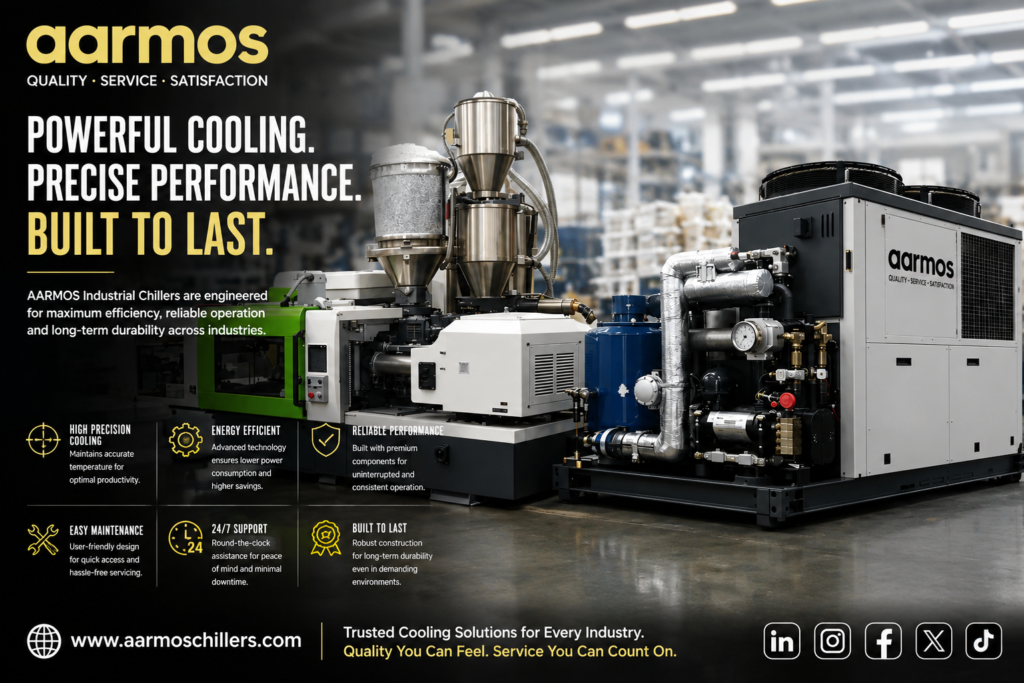
When a molding line starts producing warped parts, flash, sink marks, or inconsistent cycle times, the problem is often not the resin or the mold. It is temperature control. Process cooling for plastic industry applications directly affects product quality, machine stability, throughput, and energy use. In plastic manufacturing, cooling is not a utility in the background. It is part of the production process itself.
For factory owners, plant engineers, and production managers, that distinction matters. A chiller that is technically running but poorly matched to the load can still create scrap, force slower cycle times, and increase maintenance on molds, hydraulic systems, and auxiliary equipment. Engineers begin good process cooling with accurate load calculations and verify performance under real operating conditions.
Why process cooling for plastic industry plants is so critical
Plastic manufacturing depends on repeatable heat removal. Whether the plant is running injection molding, blow molding, extrusion, thermoforming, or film and packaging lines, the process adds heat that must be removed at the right rate and at the right temperature. If cooling water is too warm, cycle times increase and dimensional control suffers. If temperature fluctuates, the product can vary from one batch to the next.
For injection molding, mold temperature controls how quickly the part solidifies and releases. Extrusion processes rely on barrel and downstream cooling to maintain surface finish, dimensional tolerances, and line speed. Blow molding requires even cooling because temperature variations can distort shape and wall thickness. These are not minor operating issues. They directly impact rejection rates, output per shift, and customer complaints.
That is why engineering-focused cooling design matters. The goal is not simply to install a water chiller. Engineers should match the cooling system to the process, ambient conditions, duty cycle, and production plan.
Where the cooling load actually comes from
In many plastic plants, managers underestimate how many heat sources are involved. The mold is one part of the picture, but not the only one. Hydraulic oil circuits, extruder barrels, vacuum systems, compressed air aftercoolers, granulators, printing units, and closed-loop equipment all add to the total heat load.
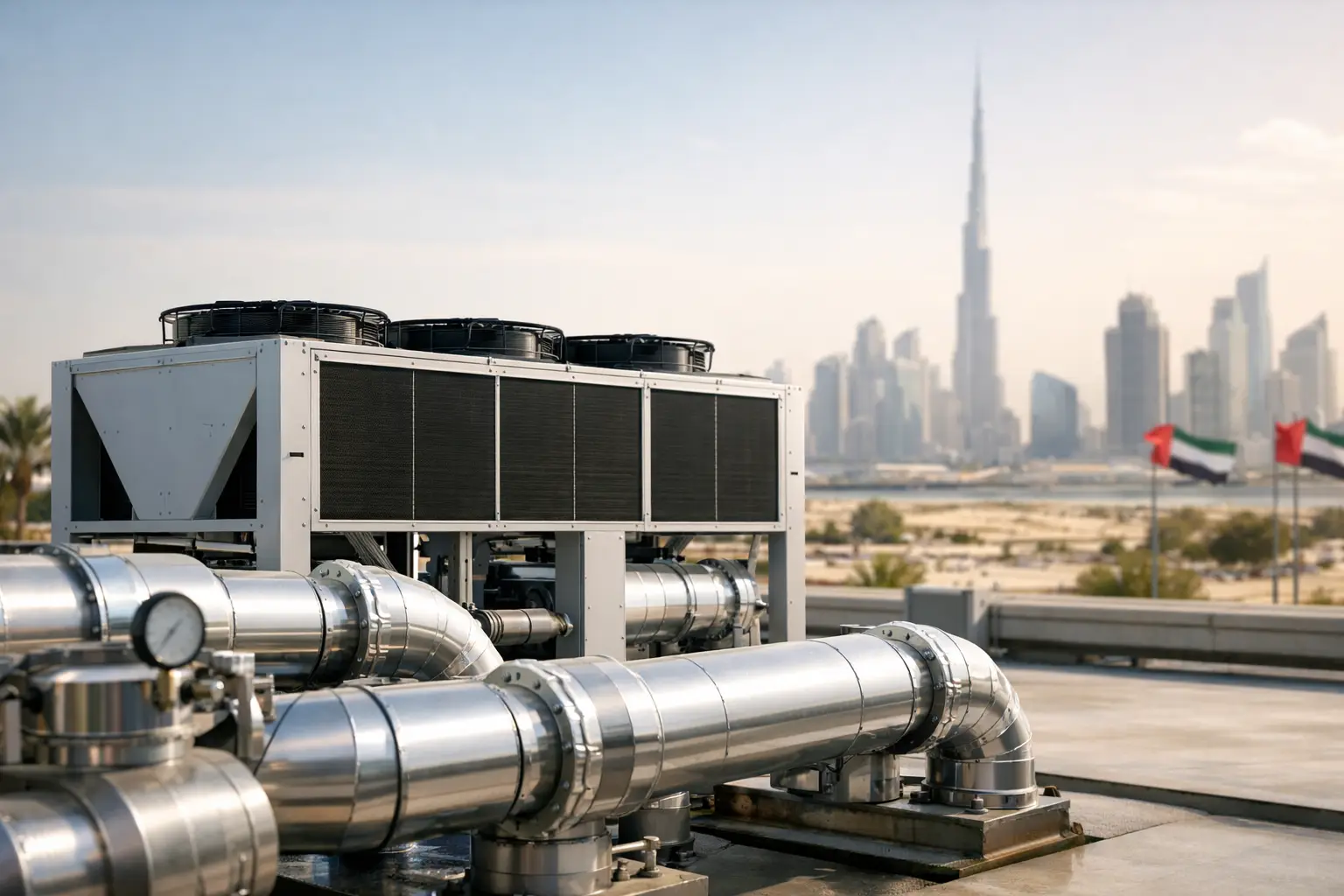
The building environment also matters. In GCC conditions, high ambient temperatures can reduce the performance of poorly selected air-cooled systems during peak summer operation. A system that seems adequate during mild weather may struggle when production is at full capacity in July or August. That is why actual operating conditions should be part of the design basis, not an afterthought. Oversizing can waste energy and create unstable operation. Undersizing leads to production losses. Selecting the best-matched chiller delivers better results than simply choosing the largest available unit.
Choosing the right system for plastic manufacturing
Most plastic factories considering process cooling for plastic industry operations are deciding between a centralized chiller plant and individual chillers for specific machines or production zones. Both approaches can work, but the right choice depends on plant layout, product mix, uptime requirements, and maintenance capability.
A centralized system is often a strong choice for medium to large facilities with multiple machines operating on a stable production schedule. It can simplify maintenance, improve control, and support expansion if designed with the right reserve capacity. It also gives engineers a clearer picture of total demand across the plant.
Dedicated machine chillers can make sense for isolated loads, smaller facilities, or applications where one process needs tighter temperature control than the rest of the plant. They can also reduce the impact of downtime if one area must remain operational while another is serviced.
Air-cooled chillers are common in the UAE and wider GCC because they simplify installation and avoid cooling tower water treatment. They are practical and dependable when selected for the real ambient temperature range. Water-cooled systems can offer efficiency advantages in some larger industrial settings, but they come with additional infrastructure and maintenance requirements. The trade-off is not just energy performance. It is water quality management, service access, and long-term operating discipline.
The design details that make or break performance
A cooling system for plastics should never be evaluated on chiller tonnage alone. Distribution design is just as important. Poor piping layout, inadequate pump selection, low flow at critical molds, or a lack of hydraulic separation can limit performance even when the chiller itself is correctly sized.
Temperature stability depends on more than setpoint. It depends on flow balance, buffer volume, control logic, and heat exchanger performance. In many plants, the real issue is not the leaving water temperature from the chiller. It is the temperature and flow that actually reach the process.
This is where field experience matters. An engineering team should review machine requirements, pressure drops, piping distances, and control strategy before equipment selection is finalized. If a plant plans to add new molding machines or increase extrusion throughput, that future demand should be considered from the beginning.
In one packaging-related process cooling project in the UAE, the operational challenge was not total cooling capacity alone. The factory faced unstable production during peak ambient conditions because process loads were changing faster than the existing system could respond. By recalculating the load, improving circulation design, and selecting equipment with more suitable control behavior, the plant was able to stabilize process temperatures and reduce unplanned interruptions. The measurable benefit was more consistent production across long operating shifts, especially during summer.
Energy efficiency matters, but reliability comes first
Factory operators naturally ask about power consumption, and they should. Cooling can be a significant operating cost in plastic manufacturing. But the lowest energy figure on paper is not always the best business decision if it comes with less stable operation or harder maintenance.
The better approach is to evaluate efficiency in the context of production. If a properly engineered system shortens molding cycle times, reduces scrap, and lowers maintenance-related stoppages, its real value can exceed the electrical savings alone. This is especially true in plants where downtime is more expensive than energy.
Useful efficiency improvements often come from practical measures such as correct chiller sizing, clean heat exchanger surfaces, insulated process piping, variable-speed pumping where appropriate, and smart staging for multi-unit systems. Controls should also be matched to how the factory actually runs. A plant with two shifts and seasonal demand changes should not be controlled the same way as a 24/7 continuous process facility.
Maintenance is part of process control
In plastic manufacturing, maintenance on the cooling system should be viewed as production protection. Fouled condensers, scale buildup, low refrigerant charge, blocked strainers, and poor water quality all reduce heat transfer. That reduction eventually shows up on the production floor as slower cycles, inconsistent parts, or machine alarms.
Preventive maintenance works best when it is tied to plant performance, not only to a calendar. If process temperatures start drifting, if operators report longer cycles, or if certain molds become harder to control, those are signs that the cooling system should be inspected before quality losses spread.
A reliable service partner should be able to troubleshoot beyond the chiller itself. The question is not only whether the unit starts and stops correctly. The question is whether the full process cooling loop is delivering the required temperature and flow under actual production conditions.
Common mistakes plastic plants make
The most common error is treating all plastic processes as if they need the same cooling solution. They do not. Injection molding, extrusion, and film lines each behave differently. Another frequent mistake is selecting a chiller based only on machine nameplate data without reviewing simultaneous load, ambient conditions, and piping losses.
Some plants also try to solve quality issues by lowering water temperature aggressively. That can help in some cases, but it is not a universal fix. If flow distribution is poor or mold channels are restricted, colder water alone may not solve the problem. It can even create new issues such as unstable control or condensation in certain environments.
The better path is to diagnose the whole system. That means looking at load profile, machine requirements, hydraulic design, controls, maintenance condition, and production goals together.
FAQs about process cooling for plastic industry plants
What temperature is best for plastic process cooling?
It depends on the process, resin, mold design, and production target. There is no single best temperature for all plastic applications. Stable and repeatable control is usually more valuable than simply running the coldest possible water.
Should a plastic factory use one central chiller or several smaller units?
That depends on plant size, uptime requirements, and process diversity. Central systems can be efficient and easier to manage, while multiple units can provide flexibility and reduce the effect of a single point of failure.
How do you know if a chiller is undersized?
Typical signs include higher process temperatures during peak production, longer cycle times, quality variation, frequent machine alarms, and poor summer performance. A load review usually confirms the cause.
Can process cooling reduce scrap rates?
Yes, when temperature instability is contributing to dimensional variation, poor surface finish, warping, or incomplete cooling. Better process control often leads directly to lower rejection rates.
How often should industrial cooling systems be serviced?
Service intervals depend on operating hours, water quality, ambient conditions, and process criticality. High-demand industrial systems usually benefit from scheduled preventive maintenance rather than waiting for faults to appear.
Plastic production rewards precision. Cooling systems should be designed with the same discipline as the machines they support. If your facility is planning a new line, struggling with unstable temperatures, or preparing for summer demand in the UAE or GCC, AARMOS can assess the load, review the process, and recommend a practical cooling solution built for dependable operation. The right system does more than cool water. It protects output, quality, and uptime.
Recent Comments
No comments to show.