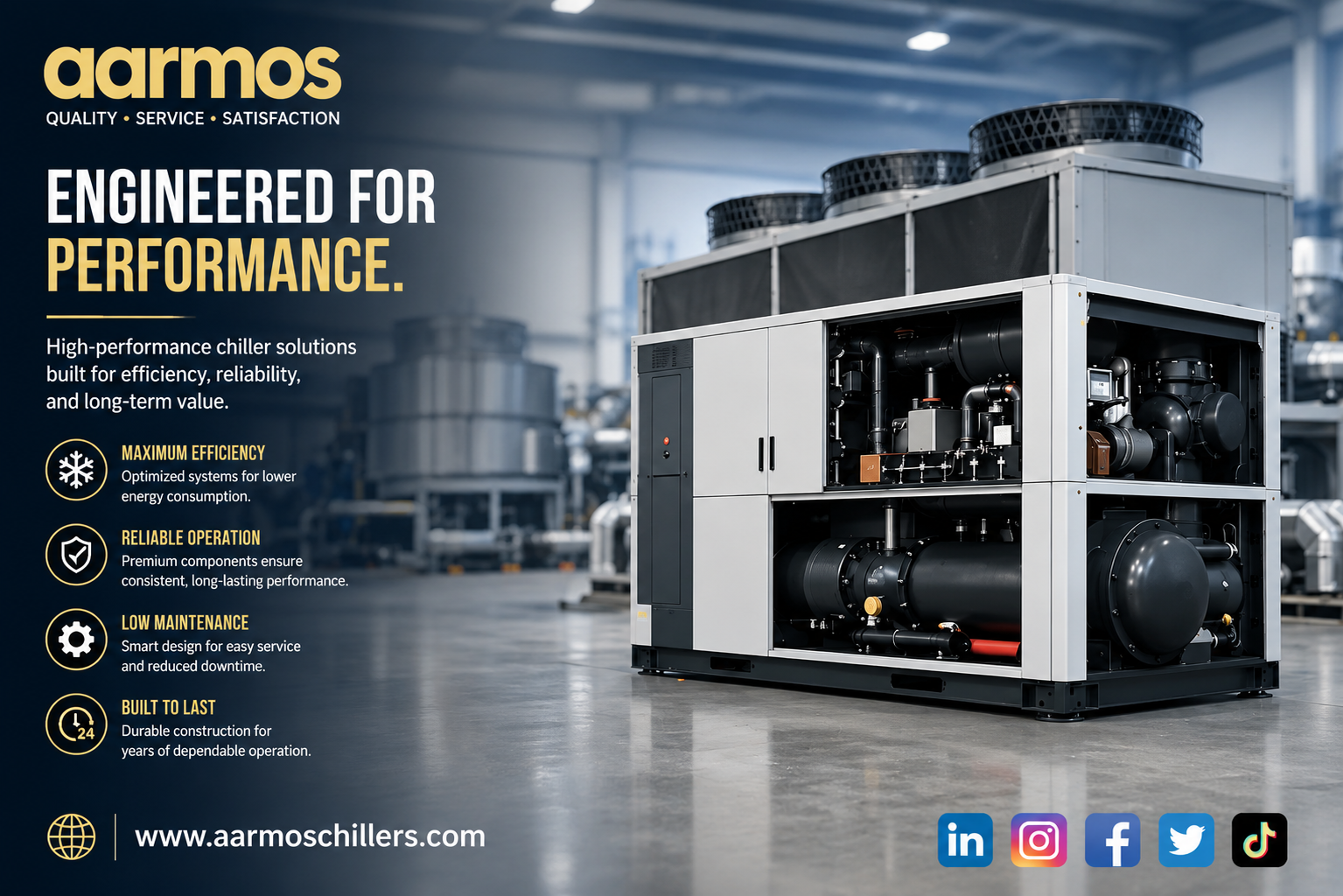
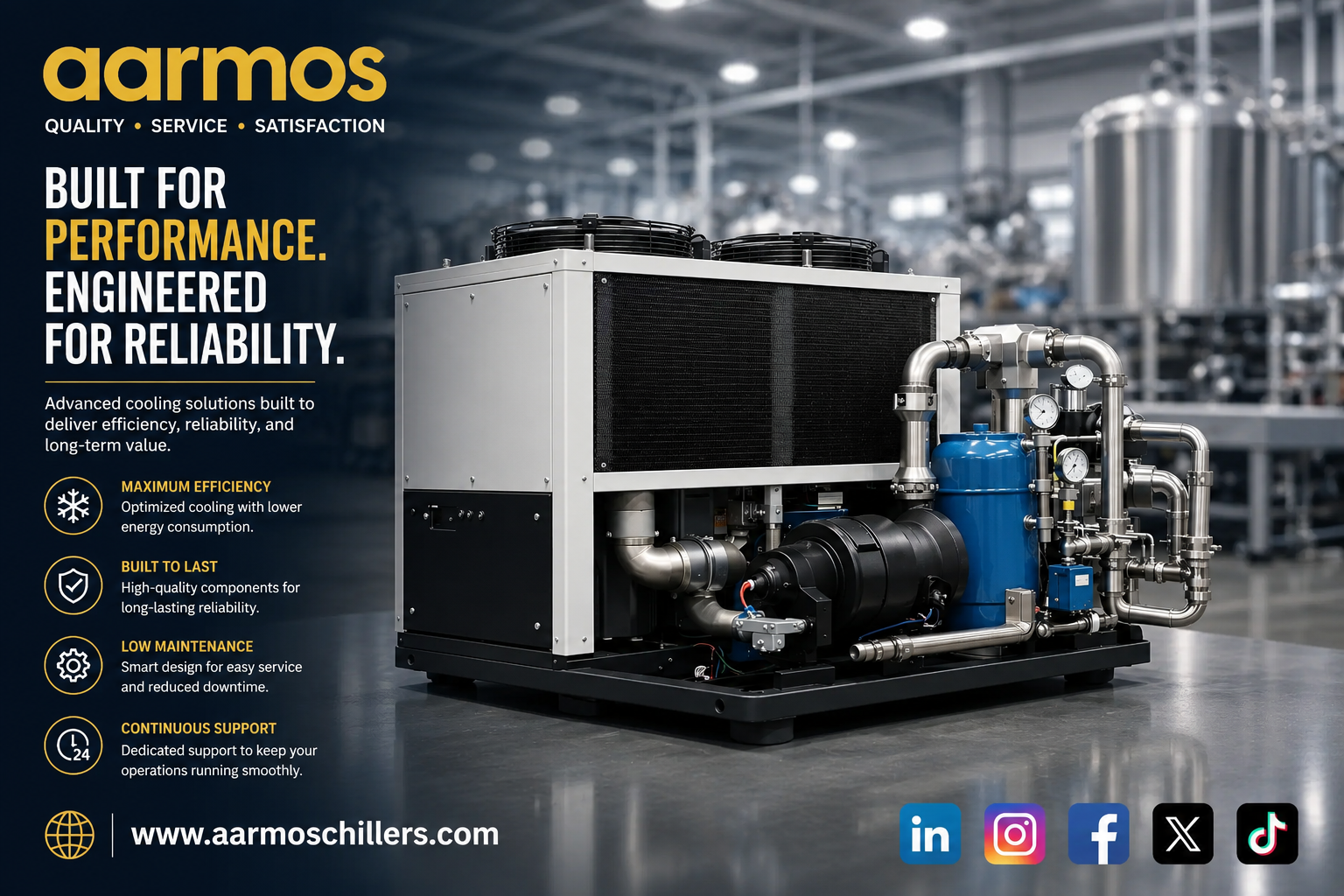
Aarmos Villa Water Chiller System
A villa pool can look perfect on paper and still be unpleasant by mid-summer. In the UAE, direct sun, high ambient temperatures, and long operating hours can push pool water well beyond a comfortable range. That is where a villa water chiller system stops being a luxury add-on and starts becoming a practical piece of engineering.
For villa owners, project managers, and MEP contractors, the real question is not whether cooling is useful. It is whether the system is correctly selected for the pool volume, site conditions, circulation setup, and expected usage. A poorly matched unit may run constantly, struggle during peak heat, and disappoint the customer. A properly engineered solution delivers stable water temperature, dependable operation, and better long-term value.
Why a villa water chiller system matters in the UAE
Swimming pools in villas across Dubai, Abu Dhabi, Sharjah, and Al Ain face a similar challenge – the water absorbs heat faster than many owners expect. Ambient temperature matters, but so do solar gain, pool orientation, wind exposure, bather load, filtration hours, and whether the pool is shaded or fully exposed.
When pool water gets too warm, comfort drops quickly. Many villa owners assume a few degrees will not make much difference, but in practice the gap between refreshing water and bath-like water is narrow. For families using the pool in the afternoon or early evening, temperature control can directly affect how often the pool is actually used.
A chiller also supports more predictable operation. Instead of relying on weather changes or nighttime cooling, the system actively removes heat and helps maintain a target range. That consistency is usually what customers value most.
How the system actually works
A villa pool chiller is typically connected to the pool water circulation line. Water passes through a heat exchanger inside the chiller, where heat is removed and rejected to the surrounding air in an air-cooled configuration. The cooled water then returns to the pool.
In most residential applications, the system operates alongside the pool pump and filtration arrangement. The performance of the chiller depends not only on its cooling capacity, but also on correct water flow, pipe sizing, electrical provisions, installation location, and control settings.
This is why equipment selection should never be reduced to pool size alone. Two pools with the same water volume may require different chiller capacities because their operating conditions are different. A rooftop-exposed overflow pool in Dubai may behave very differently from a partially shaded skimmer pool in Fujairah.
Sizing a villa water chiller system correctly
Sizing is where many projects succeed or fail. The common mistake is choosing a unit based on a rough estimate rather than a proper cooling load review. That often leads to undersized systems, long compressor run times, and customer complaints during the hottest months.
An engineering-based selection should consider pool dimensions, total water volume, desired setpoint, ambient design temperature, site exposure, circulation hours, and hydraulic conditions. If the villa includes water features, an infinity edge, or frequent daytime use, those details should be part of the calculation as well.
It also helps to separate pull-down performance from maintenance performance. Pull-down refers to how quickly the system can reduce water temperature after the pool has already become too warm. Maintenance performance refers to keeping the pool within the desired range once conditions stabilize. A system may be adequate for maintenance but too slow for pull-down, depending on the customer expectation.
That is why a realistic design conversation matters. Some owners want the pool ready every day by late afternoon. Others are comfortable with slower correction as long as the pool stays usable. The right answer depends on usage pattern, not just equipment nameplate capacity.
Design details that affect real performance
A good chiller can still perform poorly if the installation ignores field conditions. Airflow clearance is one of the most common issues. If the unit is placed in a cramped service area with hot air recirculation, capacity drops and compressor stress rises. In villa projects, aesthetics sometimes drive equipment into tight corners, but that choice can reduce the very performance the owner is paying for.
Water flow is another critical point. Too little flow can trigger faults or poor heat exchange. Too much flow may create pressure issues depending on the heat exchanger and system design. The filtration pump, bypass arrangement, and pipe route all need to work together.
Control logic also matters more than many expect. A properly set controller avoids short cycling and helps maintain stable operation. If timers, pumps, and temperature controls are not coordinated, the chiller may run inefficiently or fail to maintain the pool at the desired temperature during peak periods.
A practical project example
In one villa pool application in the UAE, the owner reported that the pool was visually attractive but rarely used from June through September because the water became uncomfortably warm by afternoon. The existing circulation system was functional, but there was no dedicated temperature control beyond standard filtration scheduling.
The solution began with a site review, pool volume verification, and operating pattern assessment. The pool had strong sun exposure for most of the day, limited shading, and family use concentrated in the late afternoon. Based on those conditions, the recommended system included an air-cooled pool chiller matched to the actual cooling load rather than a generic pool-volume estimate.
The installation included proper hydraulic integration, attention to service clearance around the unit, and control coordination with the filtration cycle. After commissioning, the pool held a more comfortable operating range during high-heat periods, and the owner reported a clear increase in actual pool usage. The measurable benefit was not just lower water temperature. It was reliable usability during the season when the pool previously became difficult to enjoy.
Projects like this are a reminder that the best results come from application-focused engineering. Equipment alone is not the full solution.
Energy efficiency and trade-offs
Every owner wants efficient cooling, but efficiency should be discussed honestly. A larger unit may cool faster, yet oversizing without a sound basis can create unnecessary cycling and system inefficiency. On the other hand, undersizing may force the unit to run for long hours and still miss the target.
The best balance usually comes from matching the system to the load, improving circulation scheduling, and reducing heat gain where practical. In some villas, partial shading or operational adjustments can reduce demand on the chiller. In others, exposure is unavoidable, and the system must be designed to handle it.
Energy performance also depends on maintenance. Dirty coils, restricted water flow, or neglected filters can steadily reduce chiller efficiency. For villa owners focused on long-term value, preventive service is not optional. It is part of system performance.
Maintenance and service expectations
A villa water chiller system should be easy to support after handover. That means accessible installation, clear controls, and routine inspection of airflow, water flow, electrical connections, and operating pressures. In coastal or dusty environments, condenser cleanliness becomes especially important.
From an owner perspective, reliability is usually tied to response time and troubleshooting quality. If a pool becomes warm during peak season, the problem needs to be identified quickly. That is why working with an engineering-driven cooling partner matters. The support should go beyond supply and extend to diagnosis, adjustment, and practical service guidance.
For contractors, this also reduces project risk. When cooling load calculation, equipment selection, installation review, and after-sales support are handled as one process, there are fewer surprises after commissioning.
FAQs about villa pool chillers
What temperature should a villa pool be kept at?
That depends on user preference, season, and time of day the pool is used. Many owners want water that feels refreshing without becoming too cold. The right setpoint is usually established during commissioning based on actual use.
Can one chiller work for every villa pool size?
No. Pool volume is only one factor. Sun exposure, ambient temperature, circulation hours, water features, and desired pull-down time all affect required capacity.
Is an air-cooled chiller suitable for villa use?
In many UAE villa applications, yes.
Air-cooled systems are widely used because they are practical to install and maintain. The key is correct sizing and proper airflow clearance.
Will a chiller solve pool comfort problems on its own?
Usually, if the root issue is
high water temperature. But the best result depends on the full system – pump flow, piping, controls, and operating schedule all play a role.
How often should the system be serviced?
Routine inspection should be scheduled before and during peak season. The exact interval depends on environment and usage, but regular preventive maintenance helps protect both efficiency and reliability.
A villa pool should be comfortable when the family wants to use it, not only when weather conditions happen to cooperate. If you are planning a new installation or correcting an underperforming pool cooling setup, AARMOS can help assess the load, recommend the right system, and support the project from design through after-sales service. The best cooling results come from practical engineering decisions made early.